
China doesn’t just regulate cryptocurrency - it banned it. Completely. And if you hold Bitcoin, especially if you’re based in China or have ties there, this isn’t just policy. It’s a life-changing restriction.
Back in 2013, China called Bitcoin a "virtual commodity." That meant you could own it, but banks couldn’t touch it. By 2017, they shut down every domestic exchange. No more trading on platforms like Huobi or OKEx inside China. Then, in May 2021, the government dropped the hammer: Bitcoin mining and trading were officially targeted as financial risks. Miners got kicked out. Exchanges got blocked. Even overseas platforms were told not to serve Chinese users.
Fast forward to 2025, and nothing’s changed. There was a wave of fake news last year claiming China had introduced a "new ban," but that was pure rumor - spread by bots, amplified by influencers, and picked up by financial news bots. The real rule? It’s been the same since 2021: all crypto activity is illegal.
What exactly is banned?
It’s not just mining. It’s everything.
- No cryptocurrency exchanges operating inside China - not even a website with a .cn domain.
- No banks, payment apps (like WeChat Pay or Alipay), or financial firms can handle crypto transactions.
- No ICOs. No staking. No derivatives. No futures trading.
- Internet companies must block crypto-related content. If your WeChat group talks about Bitcoin prices, it gets flagged.
- Overseas exchanges like Binance or Coinbase are legally forbidden from onboarding new Chinese users.
The government doesn’t just make rules - it enforces them. The People’s Bank of China works with the Ministry of Public Security to track every transaction that might link to crypto. If your bank account suddenly receives money from an overseas wallet, expect a call. If you try to convert Bitcoin to yuan through a peer-to-peer deal, you’re risking legal trouble.
What happens to Bitcoin you already own?
Here’s the harsh truth: you can still hold Bitcoin in China. No one is knocking on doors to seize your wallet. But you can’t do anything useful with it.
You can’t sell it legally. You can’t cash out through a bank. You can’t use it to pay for anything. Even buying coffee with Bitcoin? Technically possible - but risky. If the seller reports the transaction, you could be flagged.
That’s why many Chinese Bitcoin holders are stuck. They own it. They might even have a decent stack. But they can’t move it. They can’t spend it. They can’t convert it without jumping through dangerous hoops - like using offshore P2P platforms, which are unregulated, prone to scams, and sometimes linked to money laundering.
And if you try to move money out of China to trade Bitcoin abroad? The State Administration of Foreign Exchange (SAFE) watches every cross-border transfer. If you send $10,000 to an overseas exchange, you’ll need to explain why. No clear answer? Your account could be frozen.
Why does China hate Bitcoin so much?
It’s not about technology. It’s about control.
China’s government doesn’t fear Bitcoin because it’s volatile. They fear it because it’s decentralized. No central bank. No government oversight. No way to track who owns what. That’s a direct threat to their financial system.
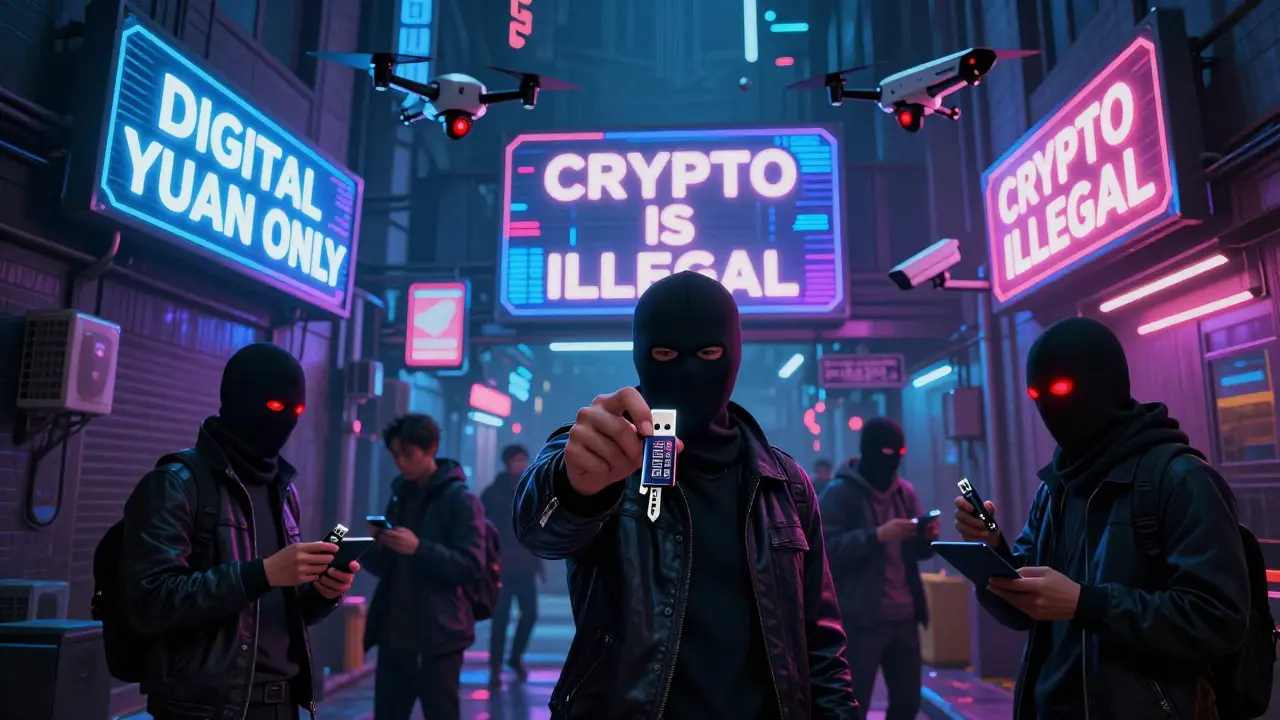
That’s why they built the Digital Yuan - their own central bank digital currency (CBDC). Unlike Bitcoin, the Digital Yuan is fully traceable. Every transaction is recorded. Every user is identified. The government can freeze accounts, limit spending, or even set expiration dates on digital cash.
They’re not trying to stop innovation. They’re trying to own it. Bitcoin represents a future where money isn’t controlled by the state. And in China, that future isn’t allowed.
Can you still trade Bitcoin in China?
Yes - but only illegally.
Despite the ban, Bitcoin trading is still common. There are underground P2P markets. There are WhatsApp groups. There are crypto ATMs hidden in convenience stores. There are traders using VPNs to access foreign exchanges.
But here’s the catch: you’re on your own. If you get scammed, there’s no legal recourse. If your wallet gets hacked, the police won’t help. If you’re caught trading, you could face fines, account freezes, or even criminal charges.
One trader in Shenzhen told Bloomberg in 2024 that he’d been using a P2P app for three years. He never got caught - but he also never cashed out more than $5,000 at a time. "I treat it like gambling," he said. "I know the rules. I don’t get greedy. I don’t tell anyone."
What about mining?
China used to mine over 70% of Bitcoin. By 2021, that dropped to near zero.
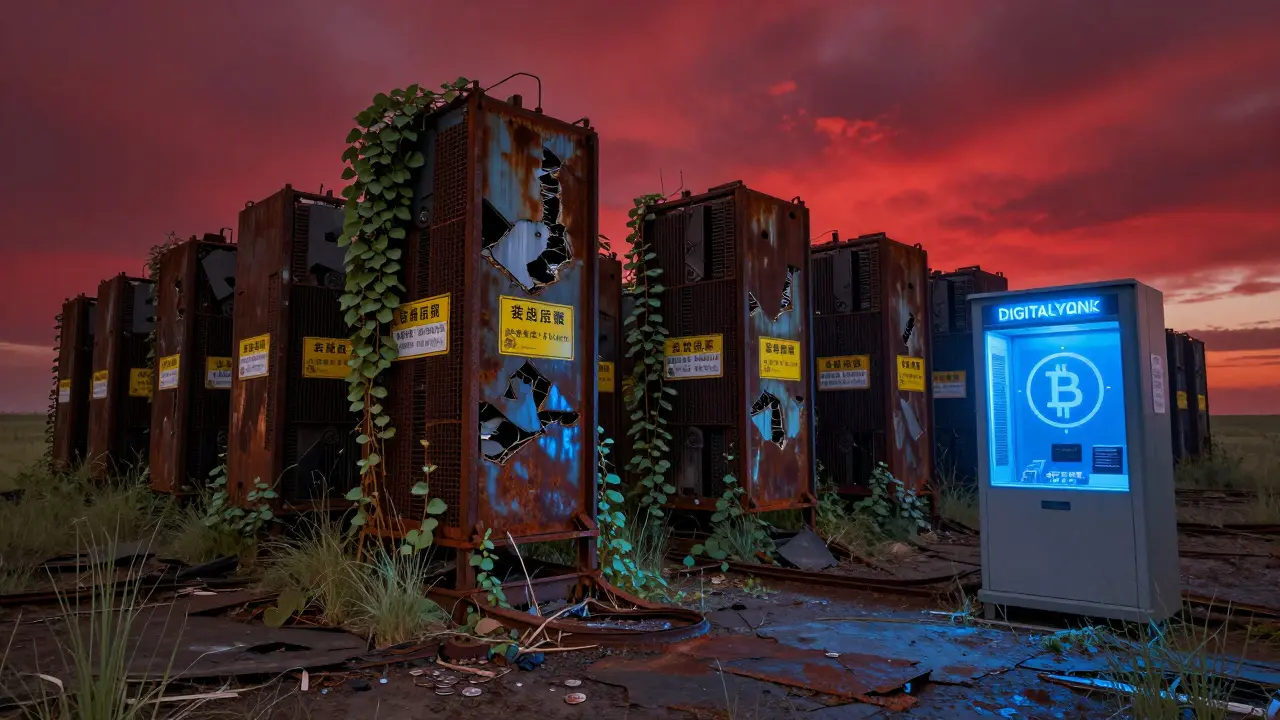
The government didn’t just shut down farms - they cut power. They raided facilities. They forced miners to sell equipment at auction. By 2023, most of the hardware had been shipped overseas - to Kazakhstan, the U.S., and even Saudi Arabia.
Today, any mining operation in China is illegal. If you’re found running even one ASIC miner in your garage, you’re violating national financial policy. No exceptions. No grace periods. No more "transition time."
What does this mean for global Bitcoin prices?
China’s ban doesn’t just affect Chinese holders - it affects everyone.
When China banned mining in 2021, Bitcoin’s price dropped 30% in a week. Why? Because traders feared a domino effect. But then it rebounded - hard. Why? Because the ban forced miners to go global, spreading out the network and making it more resilient.
Now, the bigger threat is future demand. China has over 100 million people who still hold crypto. That’s more than the entire population of Canada. If China ever lifts the ban - even slightly - those wallets could flood the market with buying power.
Analysts estimate that if Chinese investors were allowed to legally buy Bitcoin again, demand could push prices 50-100% higher in under six months. That’s why markets watch every rumor, every policy leak, every speech from Beijing.
But right now? The ban holds. And it’s not going away.
The big risk: financial isolation
The real danger isn’t losing your Bitcoin. It’s losing access to the global financial system.
If you’ve ever used a Chinese bank to send money abroad - or received salary payments - and you’ve also traded crypto, you’re at risk. Banks are required to report any transaction linked to virtual assets. One flagged transfer could mean your account is frozen. Your credit score could drop. You could be barred from getting a loan, renting an apartment, or even traveling.
There are real cases of people in Guangdong who were fined 50,000 yuan ($7,000) for buying Bitcoin through a P2P app. They didn’t get arrested - but they got blacklisted from using mobile payment apps for a year.
That’s the quiet enforcement: not jail cells, but financial exile.
What’s the future?
Will China ever lift the ban?
Don’t hold your breath.
The government has doubled down on the Digital Yuan. They’ve invested billions into blockchain infrastructure - but only for state-controlled systems. They’ve trained thousands of regulators to monitor crypto activity. They’ve built a surveillance network that tracks wallets, IP addresses, and even device fingerprints.
There’s no sign of reversal. No official statement. No leaked policy draft. No hint of change.
For Bitcoin holders in China, the message is clear: own it if you must. But don’t trade it. Don’t cash out. Don’t talk about it. And never, ever assume the rules will change.
Outside China, the lesson is different. The ban didn’t kill Bitcoin. It made it stronger. But it also showed the world: when a government decides crypto is too dangerous, it doesn’t just regulate - it erases.
Can I still buy Bitcoin in China?
Technically, yes - but only through illegal channels. You can’t buy it on Chinese exchanges. You can’t use Alipay or WeChat Pay. You’d need to use overseas P2P platforms or peer-to-peer deals, often through encrypted apps. But doing so puts you at risk of legal action, account freezes, or fines. The government doesn’t actively hunt individuals, but if you’re flagged by your bank or reported by someone, you’ll face consequences.
Can I cash out my Bitcoin in China?
No, not legally. Chinese banks are prohibited from converting cryptocurrency to yuan. Any attempt to do so - even through a friend or a third-party service - risks triggering anti-money laundering alerts. If your bank account receives funds from a crypto transaction, it may be frozen. You might be asked to prove the source of the money. Without documentation, you could lose access to your account for months.
Is mining Bitcoin still possible in China?
No. Since 2021, all Bitcoin mining has been illegal in China. The government cut power to mining farms, seized equipment, and banned new operations. Even small-scale mining at home is considered a violation. There are no exceptions. Any mining activity today is underground and extremely risky.
What happens if I get caught trading Bitcoin in China?
You won’t go to jail for owning Bitcoin. But if you’re caught trading, you could face fines (up to 50,000 yuan or $7,000), have your bank account frozen, or be banned from using digital payment apps like WeChat Pay. In rare cases, if authorities suspect money laundering or large-scale operations, criminal charges are possible. Most penalties are financial and administrative - not criminal.
Will China ever legalize Bitcoin again?
Almost certainly not - at least not in the near future. China is investing heavily in its own Digital Yuan, which gives the government full control over transactions. Bitcoin’s decentralized nature directly contradicts this goal. While rumors of a policy shift circulate every year, there’s zero official indication of change. The government sees Bitcoin as a threat to financial control - not a technology to adopt.
Can I use a VPN to access crypto exchanges in China?
Using a VPN to access foreign exchanges like Binance or Coinbase is technically possible - but it violates Chinese internet regulations. While enforcement against individual users is rare, it’s still illegal. If you’re flagged by authorities - for example, if your bank detects crypto-related transfers - using a VPN could be seen as an attempt to evade regulation. This increases your risk of account freezes or investigations.
Does China’s ban affect Bitcoin’s price globally?
Yes, but indirectly. China’s ban removed one of the world’s largest potential markets for Bitcoin. That initially caused price drops in 2021. But it also forced miners and traders to go global, making Bitcoin’s network more decentralized and resilient. Today, the bigger impact is anticipation: if China ever lifts the ban, demand from its 100+ million crypto holders could trigger a massive price surge. For now, the ban suppresses demand - but keeps the market guessing.
Sanchita Nahar
February 11, 2026 AT 15:32China just wants everyone to be broke and obedient. Bitcoin is freedom. They hate that.
Done.
Ben Pintilie
February 13, 2026 AT 00:25Bro this is wild 😳
Imagine owning crypto but not being able to spend it.
Like having a gold bar but no way to buy coffee with it.
China’s just playing 4D chess with our money lol
Sakshi Arora
February 13, 2026 AT 04:44so china banned bitcoin but people still trade it like its normal
why even bother banning if no ones listening
also why do they care so much
its just digital money right
or am i missing something
Desiree Foo
February 14, 2026 AT 12:58It’s not about banning Bitcoin. It’s about preserving the integrity of the state’s monetary sovereignty. When citizens turn to decentralized alternatives, they’re rejecting the social contract. This isn’t oppression - it’s governance. The Digital Yuan isn’t a threat; it’s the responsible evolution of currency. Those who cling to anonymity are choosing chaos over stability.
Kaz Selbie
February 15, 2026 AT 04:58Let me break this down for you. China didn’t ban Bitcoin because it’s dangerous - they banned it because they couldn’t tax it. No traceable transactions = no revenue stream. Meanwhile, the Digital Yuan? Every sip of tea you buy with it gets logged, tagged, and monetized. This isn’t ideology. It’s accounting. And it’s genius. The West is still playing Monopoly while China’s running the entire board.
Robbi Hess
February 16, 2026 AT 16:29Let me tell you something - this isn’t a ban. This is a war. A war against financial autonomy. And China is winning. They’ve turned 100 million people into silent prisoners of their own wealth. You own Bitcoin? Good. Now live with it. Watch it grow. Never touch it. Never breathe a word. That’s not policy. That’s psychological warfare.
Keturah Hudson
February 16, 2026 AT 20:51As someone who’s lived in both the US and India, I find this fascinating. In the West, we fight for privacy. In China, they fight for control. Neither is perfect. But I think the real tragedy here isn’t the ban - it’s that so many people are willing to trade freedom for convenience. WeChat Pay is easy. The Digital Yuan is seamless. But at what cost? We’re all becoming data points in someone else’s spreadsheet.
SAKTHIVEL A
February 17, 2026 AT 21:17The fundamental fallacy of decentralized finance lies in its ontological dissonance with state-centric governance paradigms. China’s regulatory architecture, predicated on the primacy of the People’s Bank of China as the sole fiduciary agent of monetary sovereignty, renders peer-to-peer asset transfers as non-compliant with the sociopolitical contract. The Digital Yuan, as a programmable sovereign digital currency, embodies the Hegelian synthesis of fiscal authority and algorithmic governance - a dialectical advancement over the anarchic libertarianism of Bitcoin. To equate the two is to confuse epistemology with ontology.
krista muzer
February 17, 2026 AT 23:13i just think its sad that people in china can own something valuable but cant use it at all
like imagine having a car but the government says you cant drive it
or having a house but cant sell it
its not about money its about dignity
and they’re just taking that away quietly
no one talks about that part
they just say "ban crypto"
but what about the people
what about their dreams
they’re not just wallets
they’re humans
Donna Patters
February 19, 2026 AT 13:25How is this even a debate? Bitcoin is a speculative asset with no intrinsic value, no legal tender status, and no regulatory oversight. China’s position is not only rational - it’s morally superior. Those who defend it are either ideologues or gamblers. The Digital Yuan is infrastructure. Bitcoin is a cult.
Michelle Cochran
February 20, 2026 AT 20:06It’s not about money. It’s about control. And control is the oldest religion. Bitcoin is the antichrist of centralized power - and China’s response? They built a cathedral of surveillance and called it progress. We call it innovation. They call it salvation. Who’s really the villain here? The people holding Bitcoin… or the ones who fear it enough to erase it?
Peggi shabaaz
February 20, 2026 AT 20:16just wanna say i feel for the people in china who own btc
they’re stuck
not because they did anything wrong
but because the system doesn’t care about them
its not fair
and no one talks about how lonely that must feel
you have something valuable
but you cant even talk about it
thats heavy
just saying
Holly Perkins
February 21, 2026 AT 12:57so china banned mining but miners just left and now its all in usa and kazakhstan
sooo… did they really win?
or did they just make bitcoin stronger?
also i think they forgot to ban vpn
lol
Ace Crystal
February 23, 2026 AT 04:24Look - this isn’t the end of Bitcoin. It’s the beginning of something bigger. China tried to bury it. Instead, they scattered it. Miners went global. Traders went underground. And now? The network is more decentralized than ever. This ban didn’t kill crypto - it made it unstoppable. The real story? The people refused to give up. And that’s why Bitcoin will outlast every government that tries to stop it.
bala murali
February 24, 2026 AT 04:11The regulatory framework in China reflects a strategic prioritization of macroeconomic stability over individual financial autonomy. While Bitcoin proponents emphasize decentralization, the institutional infrastructure of the Digital Yuan enables granular fiscal policy implementation, mitigating systemic risk. The trade-off is not merely technological - it is sociological. The state’s capacity to enforce compliance ensures resilience against speculative volatility.
Ekaterina Sergeevna
February 24, 2026 AT 23:42Oh wow. A country bans Bitcoin… and suddenly we’re all supposed to feel sorry for the poor Chinese holding it? How cute. They chose to buy a speculative asset in a country that explicitly warned them it was illegal. That’s not oppression - that’s poor life choices. Meanwhile, I’ll be over here using my legal, traceable, tax-compliant digital currency. Thanks, China, for making the rest of us look responsible.
Tammy Chew
February 24, 2026 AT 23:45China didn’t ban Bitcoin because it’s dangerous
they banned it because it’s beautiful
it’s pure
no government
no bank
just code and consent
and that terrifies them
because they can’t control beauty
they can only copy it
and call it their own
Lindsey Elliott
February 26, 2026 AT 20:35ok but like… if china banned it so hard
why are there still crypto ATMs?
why are there still p2p groups?
why do people still use vpn?
the ban is a joke
they’re just trying to scare people
but everyone’s still trading
so… who’s really in control here?