
Imagine packing up a factory the size of a football stadium, loading thousands of noisy machines onto trucks, and driving them across borders in the middle of the night. That is exactly what happened to Bitcoin mining is the process of validating transactions on the Bitcoin blockchain using specialized computer hardware called ASICs after China slammed the door shut on the industry in 2021. It wasn't just a small shift; it was a massive geographical upheaval that changed who controls the Bitcoin network forever.
Before you read further, here are the key takeaways:
- China’s share of global mining power dropped from over 75% in 2020 to under 46% by mid-2021 due to strict government bans.
- Kazakhstan became the primary destination, seeing its mining share surge six-fold as miners sought cheap coal-powered electricity.
- The United States, specifically Texas, emerged as a major hub for large-scale operations due to deregulated energy markets and renewable options.
- This migration decentralized the Bitcoin network, reducing the risk of single-country control but creating new local energy challenges abroad.
The Great Migration Begins
To understand where the miners went, we first need to look at why they left. For years, China dominated the Bitcoin landscape. By September 2020, data from the Cambridge Centre for Alternative Finance (CCAF) showed that China controlled roughly 75.5 percent of the world's mining hash rate. This meant that if the Chinese government wanted to, they could theoretically influence the entire network. But in 2021, the mood shifted dramatically.
The Chinese government didn't just frown upon cryptocurrency trading; they actively targeted the infrastructure itself. The crackdown started with provincial bans. Inner Mongolia, a region known for its coal power, banned Bitcoin mining early in 2021 as part of broader efforts to curb energy-intensive industries. This was a warning shot. When the central government followed up with comprehensive restrictions later that year, the message was clear: get out or get shut down. Unlike previous regulatory tweaks, these orders came from top-ranking committees, leaving little room for negotiation.
The result was the fastest industrial relocation in modern history. Because ASIC miners are Application-Specific Integrated Circuit machines designed solely for calculating cryptographic hashes, they are surprisingly portable. They don't need complex plumbing or permanent foundations. They just need two things: internet connectivity and a lot of electricity. This modularity allowed entire mining farms to be disconnected, crated, and shipped overseas within months.
Kazakhstan: The Unexpected Hub
If you were a miner fleeing China in late 2021, your eyes likely turned north and west toward Central Asia. Kazakhstan is a country in Central Asia that became the second-largest Bitcoin mining nation globally following the Chinese exodus emerged as the biggest winner of this migration. Why? Because it had the one thing miners needed most: abundant, cheap electricity.
The numbers tell a stark story. In September 2019, Kazakhstan accounted for only 1.4 percent of global mining power. By April 2021, that number had skyrocketed to 8.2 percent. By October 2021, reports indicated that Kazakhstan had surpassed China to become the second-largest mining country in the world. This wasn't gradual growth; it was an explosion caused by displaced Chinese equipment flooding into the country.
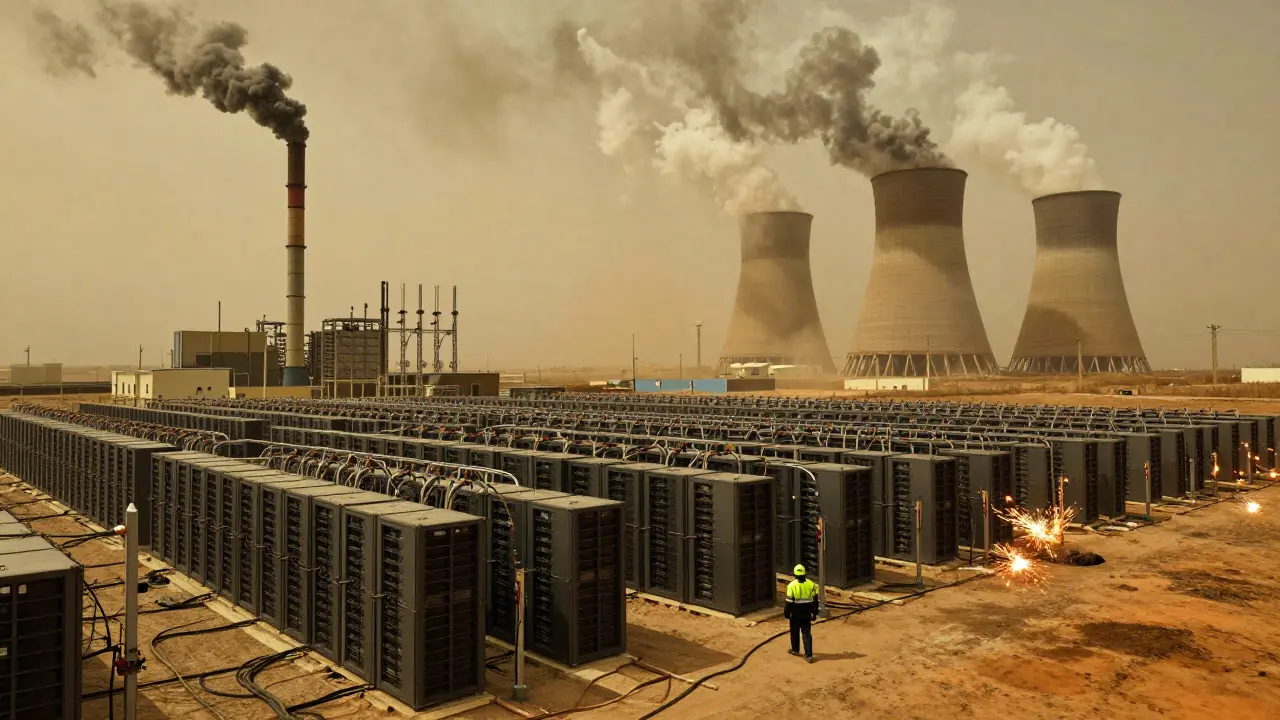
Kazakhstan’s appeal lay in its existing energy infrastructure. The country is rich in coal mines and had surplus electrical capacity that wasn't fully utilized. For miners operating on thin margins, the low cost of power was irresistible. However, this rapid influx came with growing pains. Local grids weren't built to handle such a sudden spike in industrial demand. There were reports of blackouts and strained resources in regions hosting these new facilities. While it solved the problem for the miners, it created a new set of challenges for the local population and government.
Texas and the US Rise
While Kazakhstan took the bulk of the smaller-to-medium operations, larger, more sophisticated mining companies looked elsewhere. Many turned their gaze to North America, specifically the United States. Among US states, Texas is a US state with a deregulated energy market that attracted significant Bitcoin mining investment post-2021 became the undisputed champion of American mining.
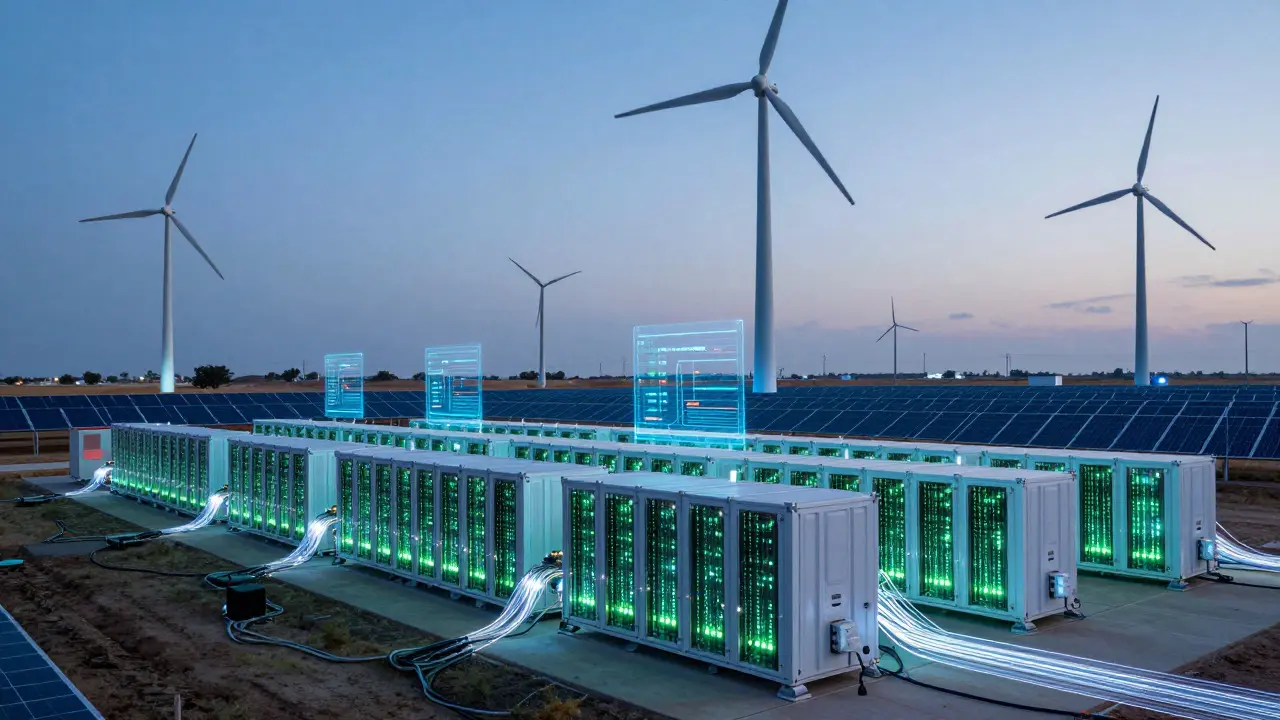
Texas offered a unique combination of factors that other places lacked. First, it has a deregulated energy market, which allows miners to negotiate directly with power producers rather than paying standard retail rates. Second, the state has a pro-business legislative stance toward cryptocurrency. Third, and perhaps most importantly, Texas has a massive amount of stranded energy-power generated by wind and solar farms that often goes to waste because the grid can't store or transport it efficiently.
Bitcoin miners act like flexible loads. When there is too much wind or sun, miners ramp up their consumption. When the grid is stressed, they can throttle back or shut down temporarily. This makes them valuable partners for grid stability. By mid-2021, Texas was home to roughly half of the 5.2 gigawatts of Bitcoin mining capacity being installed across the US. This wasn't just about moving machines; it was about integrating mining into a modern, increasingly renewable energy mix. Wind and solar make up about 22.5 percent of Texas's energy sources, offering a cleaner alternative to the coal-heavy setups in Central Asia.
Other Destinations: Russia, Iran, and Pakistan
The migration wasn't limited to just Kazakhstan and Texas. Other countries also saw increases in mining activity, though on a smaller scale. Russia is a country that maintained a significant share of global Bitcoin mining due to cheap hydroelectric power and lax regulations remained a steady player, holding around 6.8 percent of the global hash rate during the peak of the migration. Its vast territory and access to cheap hydroelectric power made it a natural fit for energy-hungry operations.
Iran is a Middle Eastern country that used Bitcoin mining to monetize excess electricity during summer months also saw a rise, capturing about 4.6 percent of the market. Iran has long struggled with energy subsidies and excess generation capacity. Allowing miners to use this surplus power helped the government generate revenue while managing grid load. Similarly, Pakistan is a South Asian country that experienced a temporary boom in Bitcoin mining before implementing stricter regulations attracted some operators initially due to very low electricity tariffs, though regulatory uncertainty eventually cooled enthusiasm there.
| Country | Share in Sept 2020 | Share in Oct 2021 | Key Driver |
|---|---|---|---|
| China | 75.5% | <46% | Government Ban |
| Kazakhstan | 1.4% | >10% | Cheap Coal Power |
| United States | ~3% | ~15% | Deregulated Energy/Renewables |
| Russia | ~6% | ~6.8% | Hydroelectric Power |
| Iran | ~2% | ~4.6% | Excess Grid Capacity |
Impact on Decentralization and Security
You might wonder: does it matter where the miners are? Yes, it matters a lot. Before 2021, having over 75 percent of mining power in one country was a risk. If China decided to censor transactions or manipulate the network, it would have been difficult for the rest of the world to stop them. This concentration threatened the core principle of Bitcoin: decentralization.
The exodus forced a redistribution of power. As miners spread across North America, Central Asia, Europe, and elsewhere, no single entity could easily dominate the network. This increased the resilience of Bitcoin. During the physical move, there was a temporary dip in the global hashrate is the total computational power dedicated to securing the Bitcoin network, measured in hashes per second. Machines were unplugged in Shenzhen and sitting in warehouses in Almaty. But once reconnected, the network not only recovered but became more robust geographically.
However, decentralization isn't just about geography; it's also about ownership. Some critics argue that while the machines moved, many were still owned by Chinese entities operating offshore. So, while the physical location diversified, the economic control might not have shifted as drastically as the maps suggest. Still, the operational independence of these new hubs means that local regulations now play a bigger role in the network's health.
Environmental Concerns and Future Trends
The migration also highlighted the environmental impact of Bitcoin mining. In Kazakhstan, the reliance on coal raised eyebrows among environmentalists. Moving mining from China to Kazakhstan didn't necessarily make it greener; in some cases, it made it dirtier. On the flip side, the move to Texas and other parts of the US allowed for greater integration with renewable energy sources. Miners in Texas can claim to be powered by wind and solar, improving the public image of the industry.
Looking ahead, the trend seems to be toward jurisdictions with stable regulations and sustainable energy. Countries that offer tax incentives and grid flexibility will continue to attract miners. We are already seeing a second wave of consolidation, where large institutional players are building purpose-built facilities in the US and Canada, moving away from the makeshift warehouse setups seen in the initial rush to Kazakhstan.
Why did China ban Bitcoin mining?
China banned Bitcoin mining primarily to reduce energy consumption and regain control over financial flows. The government viewed mining as an energy-intensive industry that contributed to carbon emissions without tangible economic output. Additionally, restricting mining helped enforce broader bans on cryptocurrency trading and capital flight.
Is Kazakhstan still the largest mining hub outside China?
While Kazakhstan was the primary beneficiary immediately after the 2021 ban, its dominance has fluctuated. Issues with local grid stability and subsequent regulatory tightening in Kazakhstan have led some miners to relocate again. Currently, the United States holds the largest share of global mining power, surpassing both China and Kazakhstan.
How do miners choose where to relocate?
Miners prioritize three main factors: electricity cost, regulatory stability, and infrastructure capacity. Cheap power is essential for profitability. Stable laws ensure they won't be banned overnight. Finally, the local grid must be able to handle the massive surge in demand without causing blackouts.
Did the Chinese ban hurt Bitcoin's security?
Temporarily, yes. The hashrate dipped as machines were moved. However, in the long run, it strengthened Bitcoin by decentralizing the network. With mining spread across multiple continents, it is harder for any single government to censor or attack the network effectively.
What role does Texas play in Bitcoin mining?
Texas is a major hub for large-scale, institutional Bitcoin mining. Its deregulated energy market allows miners to buy power directly from producers. Furthermore, miners help stabilize the grid by consuming excess renewable energy from wind and solar farms, making them a valuable asset to the state's energy infrastructure.