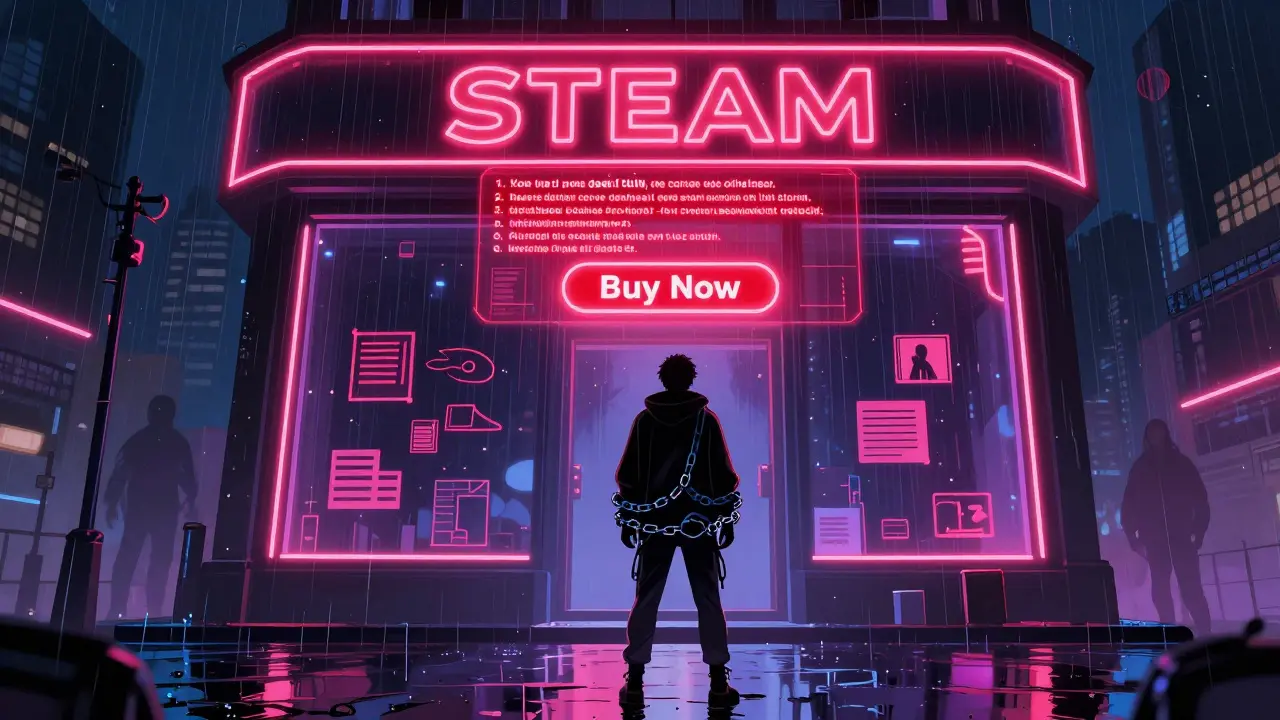
When you buy a game on Steam, an ebook on Amazon, or a song on iTunes, do you actually own it? Most people think yes. The truth? You don’t. Not really. You’re just renting it-with strings attached.
What You’re Really Buying
You click ‘Buy Now’ for $60 on Cyberpunk 2077. You download it. You play it. It feels like yours. But open the license agreement you skipped (we all do), and you’ll find this: ‘You receive a limited, revocable, non-exclusive, non-transferable license.’ That’s not ownership. That’s a lease.
That’s the reality of digital ownership today. Unlike a physical CD or DVD, where you can resell, lend, or even break it open to fix, digital files come with invisible chains. You can’t give your Steam games to your kid. You can’t sell your Kindle books on eBay. If your account gets banned-even for something unrelated-you lose everything. No refunds. No recourse.
This isn’t a glitch. It’s the system. Since the 1980s, companies like Autodesk and Microsoft shifted from selling software to licensing it. Why? Control. Revenue. Legal protection. The 2010 Vernor v. Autodesk case cemented this: courts ruled that software licenses override traditional ownership rights. Even if you paid full price, the law says you never owned it.
The Bundle of Rights You’re Missing
Real ownership comes with a set of rights-called the ‘bundle of rights.’ You can use it, sell it, lend it, modify it, pass it down. With physical things, that’s the law. With digital? Not even close.
- Right to resell? No. The first sale doctrine-which lets you sell a used book or vinyl-doesn’t apply to digital files. The 2018 Capitol Records v. ReDigi case shut down the first digital resale marketplace, saying copying a file for resale = copyright infringement.
- Right to lend? Nope. You can’t email your friend your Netflix password and say ‘here, watch this.’ Platforms block it. Even if you bought it.
- Right to inherit? Your digital library dies with you. No will can transfer your iTunes library to your heir. Apple’s terms say it’s non-transferable. Period.
- Right to modify? Only if the company lets you. Most games and apps lock down files. Tamper with them? Your license vanishes.
Compare that to buying a physical game cartridge. You can sell it at a pawn shop. Loan it to a friend. Keep it for 20 years. That’s ownership. Digital? You’re just a tenant.
California’s Law That Changed Everything
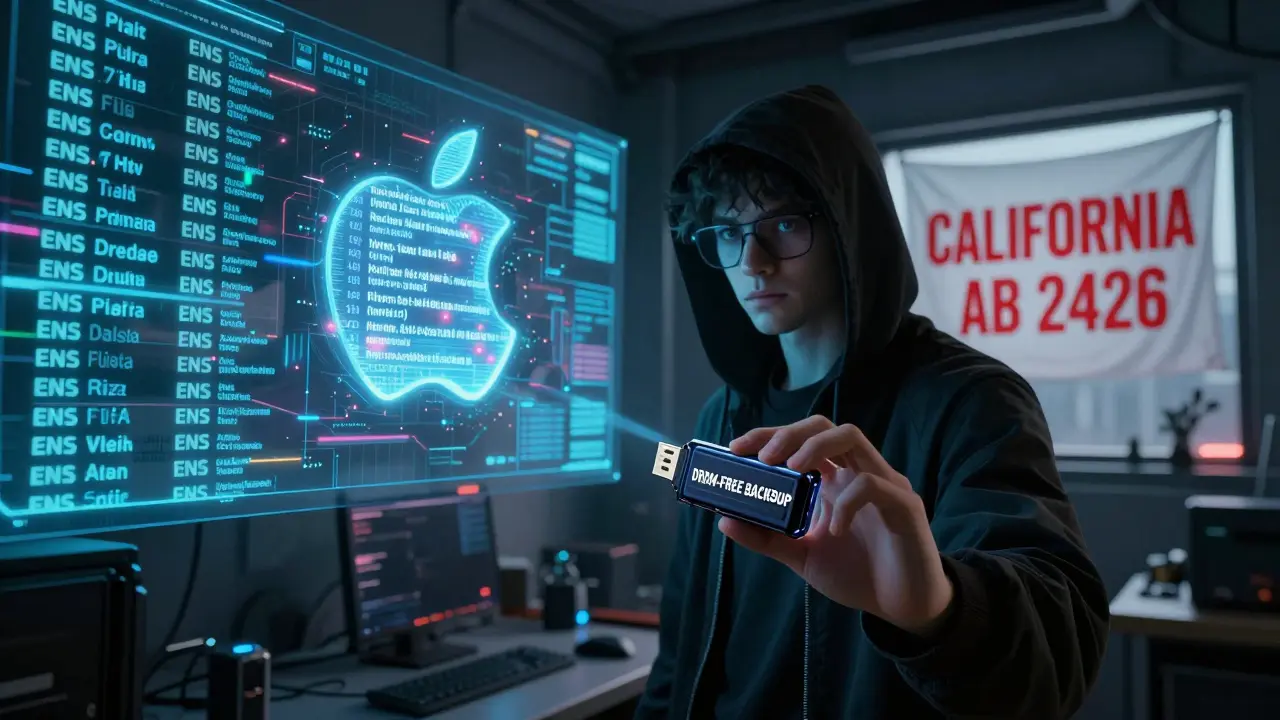
On January 1, 2024, California passed AB 2426-the first U.S. law forcing companies to be honest about digital ownership. It’s simple: if you’re selling a digital product, you must clearly say, ‘This is a license, not ownership.’
And it’s not just a footnote. The law requires the disclosure to be ‘clear and conspicuous.’ That means:
- Big font
- Contrasting color
- Right next to the ‘Buy’ button
- Linked to the full terms
Before this, companies buried the truth in 50-page EULAs. Now, you can’t miss it. Steam updated its store in February 2024 with bright banners above every game. Amazon added warnings to Kindle and Prime Video purchases. Apple’s App Store now shows a short notice before checkout.
Why does this matter? Because 78% of consumers thought they owned their digital stuff. Now, they know they don’t. And that’s just the start.
Blockchain and NFTs: A Different Model
Not all digital rights are the same. Blockchain-based assets like NFTs changed the game-by design.
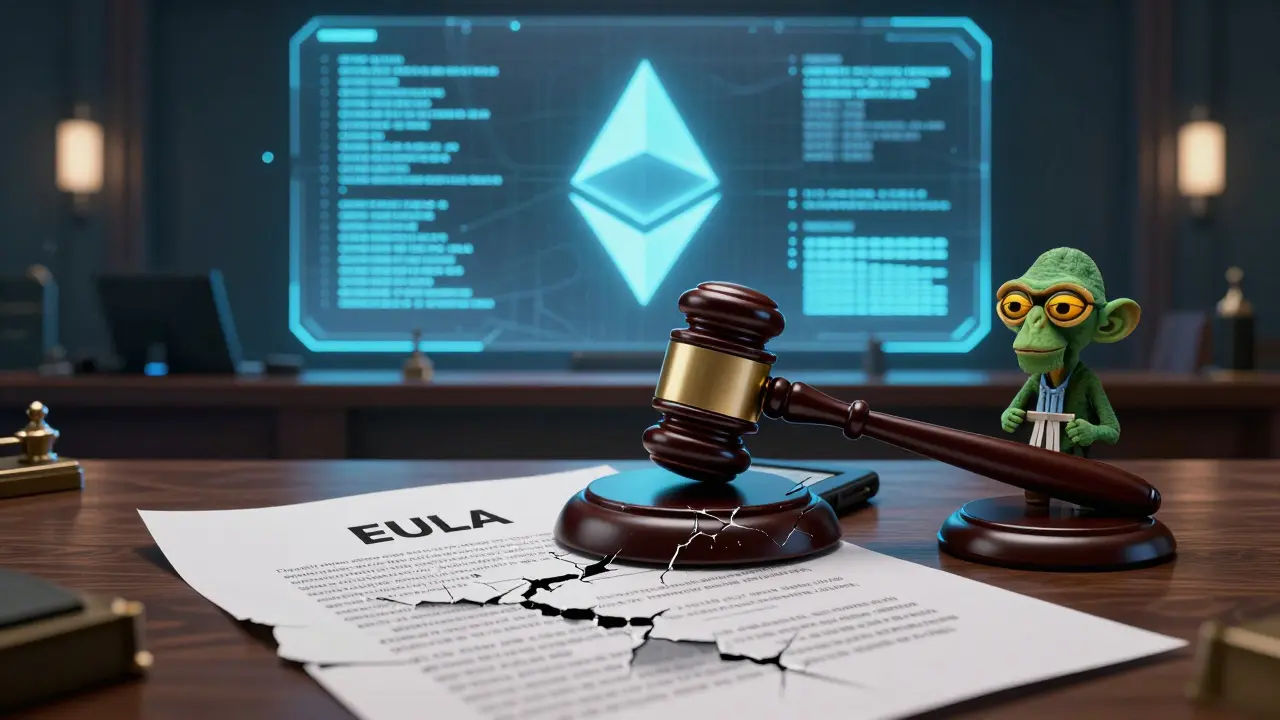
When you buy a Bored Ape Yacht Club NFT, you don’t just get a JPEG. You get commercial rights. You can make merch. You can license it. You can sell it. The ownership is recorded on Ethereum. No middleman can delete it. No platform can revoke it.
Same with Ethereum Name Service (ENS) domains. Buy a .eth address? You own it forever. No annual renewal. No subscription. The smart contract holds the key. You control it. Even if the website shuts down.
This isn’t a loophole. It’s a new legal architecture. Smart contracts don’t rely on corporate promises. They enforce rules automatically. Ownership is verifiable, transferable, and permanent. That’s why 5.2 million ENS domains have been registered-far more than the 2.1 million annual .eth renewals under old models.
But here’s the catch: most NFTs still don’t grant full rights. Many are just ‘digital collectibles’ with no legal backing. Only a few-like Bored Apes, CryptoPunks, and some music NFTs-come with clear, enforceable commercial licenses. Most buyers still don’t read the fine print.
Why Companies Love Licensing
Why don’t companies just sell digital goods outright? Because licensing is more profitable.
- Recurring revenue: Subscription models beat one-time sales. Spotify, Netflix, Adobe-they make money every month.
- Control: They can remove content. Change terms. Block users. Update software without your approval.
- Anti-resale: No used market means no price pressure. New sales stay high.
- Legal shield: If something breaks? ‘It’s your license. Not our fault.’
And it works. The global digital content market hit $1.12 trillion in 2024. 92% of those sales are licenses. Gaming alone brought in $227 billion. But here’s the dark side: when platforms shut down, users lose everything.
Amazon deleted 12 million users’ purchased content in 2022 when Cloud Drive shut down. EA removed 15 classic games from Origin. Microsoft yanked Xbox 360 titles from its store. No warning. No compensation. Just gone.
What Consumers Are Saying
People are fed up.
On Reddit’s r/truegaming, users share stories of losing years of purchases after account bans. One user wrote: ‘I paid $60 for Cyberpunk. My account got banned for using a third-party mod. Now I can’t play. I own nothing.’
Trustpilot ratings for major platforms hover around 2.3/5. The top complaints? ‘I thought I owned it.’ ‘I can’t resell.’ ‘It disappeared.’
Steam’s own 2023 survey showed 71% of users believed they owned their games. Only 12% understood they had a license. That’s not ignorance. That’s deception by design.
But not everyone hates it. Some prefer streaming. Spotify users say they like not managing files. Kindle readers like syncing across devices. Convenience has value. But convenience shouldn’t mean losing your rights.
The Future: What’s Coming
Change is coming. Fast.
California’s AB 2426 is already a model. The EU’s Digital Markets, Competition and Consumers Bill (2024) goes further-it demands digital goods have the same rights as physical ones. That could force platforms to let you resell your digital movies or games.
The U.S. Congress introduced the Digital Goods Ownership Act in March 2024. 47 lawmakers backed it. The Copyright Office announced in September 2024 it’s re-examining the first sale doctrine for digital content. Public hearings are scheduled for early 2025.
Blockchain is pushing boundaries. Projects like ENS, Arweave, and Filecoin are building permanent, decentralized ownership. Gartner predicts a ‘hybrid model’ by 2027-where you own your digital items but pay a small fee to resell them, verified on-chain.
Meanwhile, the Copyright Alliance warns that resale rights could hurt creators. But the numbers don’t back that up. Morgan Lewis found 68% of consumers would pay 15-22% more for true ownership. That’s a market. That’s revenue. That’s opportunity.
What You Can Do Now
You’re not powerless.
- Read the fine print. Before you buy, look for the license notice. If it’s not there, walk away.
- Choose NFTs with clear rights. Look for projects that state commercial usage, resale, and inheritance rights in their smart contract.
- Use decentralized platforms. Buy music on Audius. Books on Arweave. Domains on ENS. These aren’t tied to a company’s server.
- Ask for ownership. Tell platforms: ‘I’ll pay more if I can own this.’ Demand transparency. Support laws like AB 2426.
- Back up what you can. If you bought a game, save the installer. If you bought an ebook, download it in DRM-free format (EPUB, PDF).
Digital ownership isn’t dead. It’s just being rewritten. And you have a say in how it turns out.
roxanne nott
December 18, 2025 AT 08:16lol so you paid $60 for a digital lease? congrats, you got scammed by a EULA. i bought a game in 2015 and now it’s gone because EA decided to ‘optimize their library.’ your ‘ownership’ is a meme.
Craig Fraser
December 18, 2025 AT 14:08It’s not deception-it’s business. If you want ownership, buy physical media. The moment you click ‘agree,’ you waived your rights. Don’t cry when the terms are clear. You just didn’t read them.
Ellen Sales
December 19, 2025 AT 01:47so basically we’re all just tenants in a digital slum owned by tech giants. i paid for my steam library like it was my house… and now i can’t even give it to my sister. thanks, capitalism.
Jacob Lawrenson
December 19, 2025 AT 07:45bruh i bought 30 games on steam. 8 are gone now. one because i used a mod, another because the dev pulled it. i’m not mad… i’m just disappointed. i thought i owned them. turns out i just rented them with extra steps.
Sarah Glaser
December 21, 2025 AT 05:32This isn’t just about rights-it’s about identity. Our digital libraries are archives of our lives: the games we played during lockdown, the books that changed us, the music that got us through heartbreak. To treat them as disposable licenses is to erase our personal history. We’re not consumers-we’re custodians.
Janet Combs
December 22, 2025 AT 05:09i just bought a game and saw the ‘this is a license’ banner… and i still clicked buy. i’m not proud. but i needed it. we all do. convenience wins every time.
Jordan Renaud
December 23, 2025 AT 15:17the real tragedy isn’t that we don’t own digital goods-it’s that we’ve stopped asking for it. we accepted ‘terms and conditions’ as gospel. but what if we demanded better? what if we paid more for ownership? companies would listen. they always do when money talks.
Cathy Bounchareune
December 25, 2025 AT 10:48my grandma just got her first Kindle. she thinks she owns the books. i tried explaining licenses. she said ‘but i paid for them!’ and i just… cried. this isn’t a legal issue-it’s a cultural one. we’ve normalized theft by consent.
Dan Dellechiaie
December 27, 2025 AT 08:01you think this is bad? wait till the next ‘digital rights management’ update that bricks your ‘owned’ console games because they detected ‘unauthorized hardware.’ remember the PS3 jailbreak fiasco? same playbook. corporations don’t want you to own anything-they want you to rent forever.
Sybille Wernheim
December 28, 2025 AT 00:48i switched to audius for music and arweave for ebooks. yeah, it’s less convenient. no auto-sync. no one-click buy. but when i die, my daughter gets my library. not a corporation. not a server. me. that’s worth the hassle.
Shubham Singh
December 29, 2025 AT 15:19the notion that consumers deserve ‘ownership’ of digital content is a fallacy rooted in 20th-century analog thinking. intellectual property is not a commodity-it is a privilege granted under contractual terms. to demand otherwise is to misunderstand the nature of digital creation.
Radha Reddy
December 29, 2025 AT 20:55in India, we understand this better than most. We’ve been buying pirated software for decades because we knew we’d never truly own it. Now the West is catching up. Maybe it’s time to stop pretending digital is like physical. It’s not. Adapt.
vaibhav pushilkar
December 30, 2025 AT 13:01if you want real ownership, go NFT. but only if the license is on-chain. look for projects with clear IP rights in the smart contract. most are garbage. but Bored Apes? CryptoPunks? those are the real deal. don’t buy JPEGs-buy rights.
Charles Freitas
December 31, 2025 AT 20:38oh wow, a 5000-word essay on how you got scammed by Amazon. did you also cry when your Netflix password got revoked? maybe stop paying for things you don’t control. just use torrents. at least then you own the file.
Zavier McGuire
January 2, 2026 AT 12:20the first sale doctrine never applied to digital files because they’re copied not transferred. end of story. stop pretending tech companies are evil. they’re just following the law you helped create by clicking ‘agree’
Sheila Ayu
January 4, 2026 AT 03:48but… what if… we… just… stopped… buying… digital… stuff… altogether…?!!?!?!?!!?!
Ashley Lewis
January 4, 2026 AT 08:23how quaint. you think you deserve ownership of a file you didn’t create? creators deserve royalties, not consumers demanding resale rights. your ‘ownership’ fantasy is a threat to artistic livelihoods.
Luke Steven
January 5, 2026 AT 04:59i used to think owning digital stuff was a right. now i think it’s a luxury. i keep my backups. i buy DRM-free. i pay extra for ENS domains. it’s not about being right. it’s about being prepared. the world’s changing. i’d rather be ahead than angry.