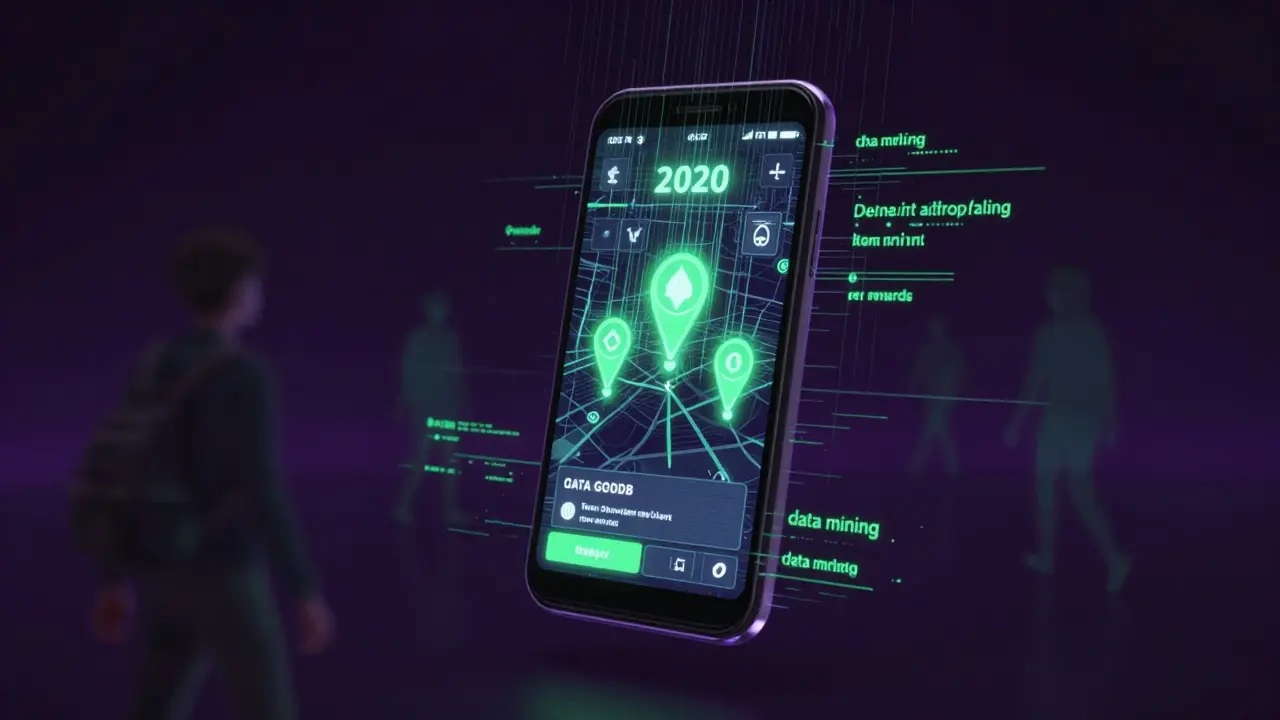
Remember the hype around getting free crypto just for walking around with your phone? That was the promise of the GEOCASH airdrop by GeoDB, a blockchain project that aimed to reward users for their location and behavioral data. The campaign peaked in 2020, inviting thousands to download an app and earn tokens. But if you are searching for this today in 2026, you need to know exactly where things stand. The original airdrop is long over, the token has migrated networks, and the ecosystem has evolved significantly.
This guide cuts through the noise. We will break down what the GeoDB airdrop actually was, how it worked back then, and most importantly, what happened to those GEO tokens since. Whether you are holding old tokens from 2020 or just curious about the history of data monetization in crypto, this article covers the technical shifts, current market reality, and what you should do next.
The Origins of the GeoDB Airdrop Campaign
To understand the current state of GEO, we have to look back at its launch. GeoDB positioned itself as a challenger to the big tech giants who profit from user data without compensation. Their pitch was simple: democratize the $620 billion Big Data and AI industry by giving control back to the data generators-you and me.
The core mechanism was a mobile application available on Android and iOS. Users didn't just "mine" in the traditional sense; they participated in a data-sharing economy. By allowing the app to track location data, browsing habits, and other digital footprints, users earned GEO tokens. This was marketed as "data mining," where your daily movement translated into cryptocurrency rewards.
The 2020 airdrop was the primary distribution method. It wasn't a one-time claim but a multi-tiered system:
- Daily Claims: Users could claim free GEO tokens every day simply by opening the app and maintaining activity.
- Referral Programs: Existing users earned bonuses by inviting friends. Referral codes like 'MDHALIM759_PXGYZQ' were widely circulated to track acquisitions.
- Regional Promotions: Specific campaigns targeted certain markets. For instance, there was a notable promotion offering 10 free GEO tokens on the Bitforex exchange, limited strictly to 2,000 Indian participants.
The barrier to entry was low. You downloaded the app, accepted the terms, and created a wallet. Crucially, users were instructed to save their mnemonic phrases and private keys. If you lost those keys during the 2020 rush, recovery was often impossible because the platform operated on a non-custodial model for many features.
Tokenomics: Supply, Distribution, and Specifications
Understanding the value of any crypto asset starts with its supply mechanics. The GEO token had specific constraints that shaped its scarcity and distribution potential.
| Attribute | Value / Detail |
|---|---|
| Maximum Supply Cap | 350,000,000 GEO |
| Total Supply Issued | 313,170,000 GEO |
| Circulating Supply (Historical) | ~82,640,000 GEO |
| Original Blockchain | Ethereum (ERC-20) |
| Contract Address (ETH) | 0x147f...126750 |
| Current Network | ODIN Chain |
The gap between the maximum cap (350 million) and total issued (313.17 million) suggests that not all allocated tokens were distributed during the initial phases. The circulating supply of roughly 82 million indicates that a significant portion remained locked, held by the team, or reserved for future ecosystem development. This structure is common in early-stage projects to ensure liquidity while retaining resources for growth.
However, the critical detail here is the network change. Originally an ERC-20 token on Ethereum, GEO has since announced and executed a migration to the ODIN Chain, a blockchain network focused on interoperability and scalability, often associated with South Korean Web3 initiatives. This migration affects how you interact with the token today. If you still hold GEO on Ethereum, you may need to bridge or swap them, depending on the current status of the legacy contract.
From GeoDB to Wallace Wallet: Ecosystem Evolution
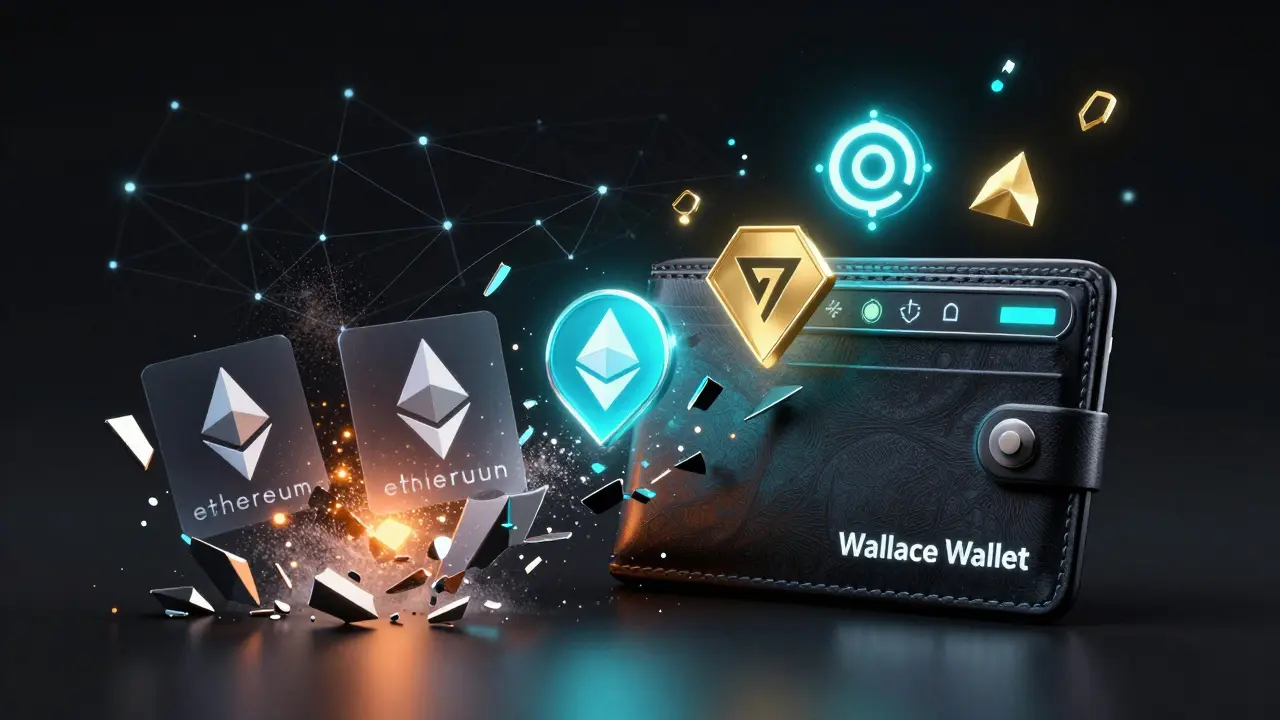
One of the biggest points of confusion for users searching for "GeoDB" today is the brand shift. The project didn't disappear; it rebranded and expanded. The primary interface for interacting with the ecosystem became the Wallace Wallet, a non-custodial cryptocurrency wallet that supports multiple blockchains and integrates with the ODIN Chain.
Why the change? GeoDB realized that a single-purpose data-mining app had limited appeal. By evolving into a full-featured wallet, they could offer broader utility. Wallace Wallet allows users to manage not just GEO, but various other assets across different chains. This pivot aligns with the broader trend in crypto where standalone apps merge into multi-chain wallets to retain users.
For those who participated in the 2020 airdrop, the transition meant migrating their engagement from the GeoDB app to the Wallace Wallet interface. Community engagement also shifted. While Telegram channels like t.me/WallaceWallet remained active hubs for support and updates, the focus moved from "how to mine more GEO" to "how to use the wallet for DeFi and cross-chain transactions."
If you are trying to access old GEO tokens, check if they are accessible via the Wallace Wallet. Since the wallet is non-custodial, your funds are tied to your private keys, not the company's servers. As long as you have your seed phrase, your assets should be recoverable, provided you update the wallet software to recognize the new ODIN Chain network parameters.
Current Market Reality: Price, Volume, and Liquidity
Let’s talk numbers. If you are holding GEO tokens from the 2020 airdrop, you might be wondering about their current value. The reality is starkly different from the promotional claims of earning "$5 or more daily" seen in 2020 videos.
As of mid-2026, the market data paints a picture of a mature, low-activity asset. Here is the breakdown:
- Current Price: Approximately $0.0001664 per GEO.
- 24-Hour Volume: Roughly $120.24. This is extremely low, indicating minimal trading interest.
- Price Trend: While there might be small short-term fluctuations (e.g., a 0.98% gain in 24 hours), the longer-term trend shows a decline (-6.34% over recent periods).
- Trading Pairs: Primarily traded on Uniswap V2 (Ethereum) as GEO/WETH, with a spread of 0.63%. However, trades are infrequent, with gaps of days between recorded transactions.
The low volume is a key indicator. In crypto, liquidity is king. With only $120 in daily volume, selling even a modest amount of GEO could cause significant slippage, meaning you’d get much less than the listed price. The token is effectively illiquid for large holders.
Furthermore, the market capitalization is negligible compared to major assets. The token's value in BTC terms is roughly 0.2330 satoshis per GEO, highlighting its diminished purchasing power against Bitcoin. This isn't necessarily a failure-it's a natural lifecycle for many airdrop tokens that served their purpose in user acquisition but didn't sustain mass adoption as a medium of exchange.
Technical Migration: Ethereum to ODIN Chain
The move from Ethereum to ODIN Chain is the most critical technical update for GEO holders. Ethereum, while secure, suffers from high gas fees and slower transaction speeds. For a micro-token like GEO, paying $5-$20 in gas fees to transfer $1 worth of tokens is economically unviable.
ODIN Chain offers lower costs and faster finality. This migration was necessary for the project's survival. It allows for:
- Microtransactions: Enabling the original vision of rewarding users for small data interactions without prohibitive fees.
- Interoperability: ODIN Chain is designed to work well with other networks, potentially opening up new DeFi opportunities for GEO.
- Reduced Congestion: Moving away from the crowded Ethereum mainnet improves user experience.
However, migrations can be tricky. If you never updated your wallet to support ODIN Chain, your GEO tokens might appear "stuck" on Ethereum explorers. To resolve this, you typically need to:
- Ensure your Wallace Wallet (or compatible wallet) is updated to the latest version.
- Add the ODIN Chain network manually if it doesn't auto-detect.
- Check if a bridge service is active to move legacy ETH-based GEO to the new chain.
If no bridge exists and the Ethereum contract is abandoned, those tokens may be permanently inaccessible. Always verify official announcements from the Wallace Wallet team before attempting any bridging actions to avoid scams.

User Experience and Community Feedback
What did users actually think? During the 2020-2021 peak, feedback was mixed. Promotional YouTube videos generated thousands of views, suggesting genuine curiosity. Many users appreciated the novelty of being paid for data. However, complaints arose about:
- Battery Drain: Continuous location tracking consumed significant phone battery.
- Privacy Concerns: Despite promises of anonymity, sharing precise location data made some users uneasy.
- Earning Discrepancies: The advertised "$5/day" was rarely achieved by average users. Most earned fractions of a cent daily.
Long-term satisfaction metrics are scarce because the community fragmented after the rebrand. Those interested in pure data monetization left, while those interested in general crypto wallets stayed with Wallace Wallet. Today, the community is smaller but more focused on technical usage rather than speculative mining.
Is GEO Still Worth Holding?
This depends entirely on your goals. If you are looking for quick profits, GEO is likely not the answer. The low liquidity and downward price trend make it a poor candidate for short-term trading. The risk of losing value due to slippage or further devaluation is high.
However, if you believe in the long-term vision of decentralized data ownership and the ODIN Chain ecosystem, holding GEO might make sense as a speculative bet on the Wallace Wallet's success. The project has survived the bear markets, which speaks to some level of resilience and ongoing development.
Consider these factors before deciding:
- Liquidity Risk: Can you sell when you want? Probably not easily.
- Development Activity: Is Wallace Wallet adding new features? Yes, but slowly.
- Opportunity Cost: Could your time/capital be better spent elsewhere? Likely yes, given the current market conditions.
Next Steps for GEO Holders
If you found old GEO tokens in a forgotten wallet, here is what you should do:
- Secure Your Keys: Ensure your mnemonic phrase is backed up offline. Never share it.
- Update Your Wallet: Download the latest version of Wallace Wallet or a compatible multi-chain wallet.
- Verify Network: Check if your tokens are on Ethereum or ODIN Chain. Use block explorers for both networks using your public address.
- Assess Value: Calculate the USD value based on the current ~$0.00016 price. If it's negligible, consider leaving it as a souvenir of early crypto participation.
- Stay Informed: Follow official Wallace Wallet social channels for any future airdrops or token upgrades related to the ODIN Chain.
The era of easy airdrop riches is largely behind us. Projects like GeoDB laid the groundwork for more sophisticated data economies, but the financial rewards have normalized. Treat GEO not as a lottery ticket, but as a historical artifact of the 2020 crypto boom-and a small stake in the evolving ODIN Chain ecosystem.
Is the GeoDB airdrop still active in 2026?
No, the original GeoDB airdrop campaign concluded years ago, primarily running between 2020 and 2021. There are no current promotions offering free GEO tokens for downloading the app. Any sites claiming otherwise are likely scams.
How do I convert my old Ethereum GEO tokens to ODIN Chain?
You need to use the Wallace Wallet or a compatible multi-chain wallet. Ensure your wallet is updated to support ODIN Chain. Check if an official bridge is available from the Wallace Wallet website. Do not use third-party bridges unless verified by the official team, as this poses a security risk.
What is the current price of GEOCASH (GEO)?
As of mid-2026, GEO trades at approximately $0.0001664. However, liquidity is very low, with daily volumes around $120. This means selling large amounts may result in significant price slippage.
Is Wallace Wallet safe to use?
Wallace Wallet is a non-custodial wallet, meaning you control your private keys. This makes it generally safer than custodial exchanges because the company cannot freeze your funds. However, you are responsible for securing your seed phrase. If you lose it, your funds are unrecoverable.
Can I still earn GEO by sharing data?
The original "mining" feature that rewarded users for location data has been largely phased out or integrated into broader Wallace Wallet activities. The focus has shifted from data mining to wallet utility and ODIN Chain ecosystem participation. Check the current Wallace Wallet app for any active reward programs.
Where can I buy or sell GEO tokens?
GEO is primarily traded on Uniswap V2 (Ethereum) as a GEO/WETH pair. Due to low liquidity, expect high slippage. It may also be available on smaller DEXs on the ODIN Chain. Always verify the correct contract address before trading to avoid fake tokens.