
China’s cryptocurrency ban is not just a line in a legal document; it is a wall built into the daily financial lives of over a billion people. That wall is constructed by two giants: Alipay and WeChat Pay, operated by Ant Group and Tencent respectively. If you try to send money to a crypto exchange or buy Bitcoin using these platforms, the transaction fails instantly. But how do they do it? And why does this matter for anyone interested in global finance?
In 2026, the enforcement mechanism behind China’s crypto prohibition has become one of the most sophisticated surveillance and blocking systems in the world. It goes far beyond simple keyword filtering. It involves real-time behavioral analysis, cross-agency data sharing, and a coordinated effort by state-owned banks to cut off every possible funding channel for private cryptocurrencies. Understanding this system reveals not just how China controls capital, but how digital infrastructure can be weaponized to enforce policy at scale.
The Regulatory Architecture Behind the Block
To understand why your transaction gets rejected, you have to look at who is pulling the strings. The ban isn’t enforced by a single agency. It is a multi-layered operation involving six major regulatory bodies. At the top sits the People’s Bank of China (PBOC), which sets the overarching monetary policy and mandates that commercial banks and payment processors block crypto-related flows.
Supporting the PBOC are the National Administration of Financial Regulation (NAFR), which oversees non-bank financial institutions, and the China Securities Regulatory Commission (CSRC), which monitors any securities-like trading activity. Then there is the Cyberspace Administration of China (CAC), which controls internet content and platform operations, ensuring that apps like Alipay and WeChat comply with censorship rules. The Ministry of Public Security (MPS) handles criminal investigations into illegal fundraising and money laundering, while the State Administration of Foreign Exchange (SAFE) strictly monitors cross-border capital flows to prevent currency outflows.
This structure creates a 'net' where no single point of failure exists. If Alipay misses a suspicious pattern, the bank account linked to it might flag it. If the bank misses it, the CAC might notice unusual app usage patterns. For users, this means that compliance is not optional; it is automated and mandatory.
Technical Enforcement: How the Blocks Work
You might think that simply changing the name of a merchant from 'Bitcoin Exchange' to 'Tech Consulting' would bypass the filters. In 2026, that strategy rarely works. Both Alipay and WeChat Pay employ advanced transaction monitoring systems that analyze more than just text labels.
These platforms use machine learning models trained on years of illicit transaction data. They look for:
- Counterparty Risk: Is the recipient linked to a known crypto exchange, even indirectly? If a small vendor receives funds from multiple sources and then sends large sums to an offshore entity flagged as crypto-related, the system flags the entire chain.
- Behavioral Patterns: Do you suddenly start making small, frequent transfers to new recipients at odd hours? This mimics 'smurfing,' a money laundering technique, and triggers automatic holds.
- Geographic Anomalies: Are you attempting transactions with entities in jurisdictions known for lax crypto regulations, such as certain Southeast Asian hubs?
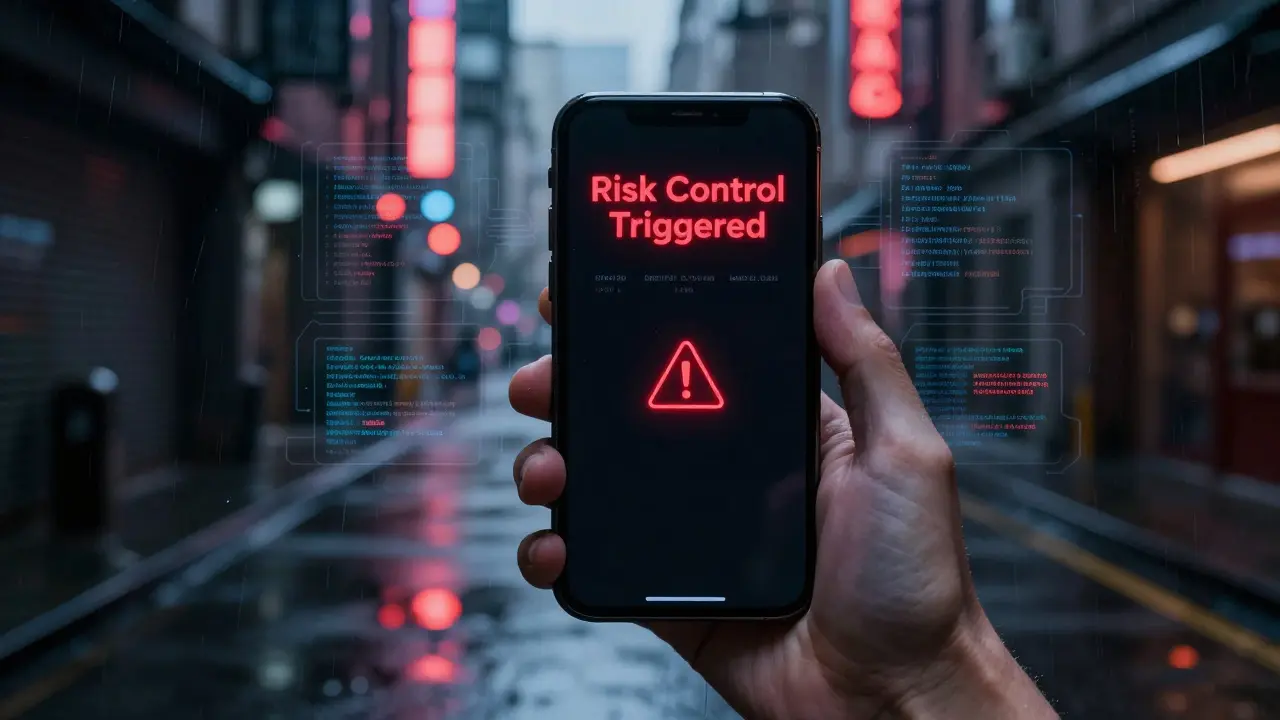
When a red flag is raised, the transaction is blocked immediately. The user often sees a generic error message like 'Service Unavailable' or 'Risk Control Triggered.' In many cases, the account is placed under enhanced scrutiny. Users may be required to provide additional documentation, explain the source of funds, or even visit a physical branch to verify their identity. This friction is intentional. It makes engaging in crypto activities inconvenient, risky, and time-consuming.
The WeChat Dilemma: Payment vs. Messaging
WeChat Pay faces a unique challenge because it is embedded within WeChat, a super-app that combines payments with encrypted messaging, social media, and business tools. While the payment arm is tightly monitored, the messaging arm offers criminals a way to coordinate without directly triggering financial alerts.
Criminal organizations have adapted by using WeChat chats to arrange over-the-counter (OTC) trades. They share wallet addresses via chat, agree on prices, and then use separate, less-monitored channels-or sometimes WeChat Pay itself with obfuscated merchant codes-to complete the fiat portion of the trade. Because WeChat’s messaging is end-to-end encrypted, law enforcement cannot easily read these conversations unless they have a court order and technical access, which is difficult to obtain for cross-border crimes.
This creates a gap in enforcement. Experts note that traditional Know Your Transaction (KYT) tools can trace blockchain movements but miss the 'off-chain' planning happening inside WeChat. As a result, regulators are pressuring Tencent to integrate deeper analytics between its messaging and payment divisions. However, privacy concerns and technical limitations mean this remains a cat-and-mouse game. For now, WeChat remains a blind spot compared to Alipay, which is purely a financial tool.
Comparison: Mainland China vs. Regional Alternatives
| Jurisdiction | Primary Regulator | Retail Crypto Trading | Payment Platform Role |
|---|---|---|---|
| Mainland China | PBOC, NAFR, CSRC | Banned | Active Blocking & Monitoring |
| Singapore | Monetary Authority of Singapore (MAS) | Licensed & Regulated | Neutral Facilitation |
| Hong Kong | Securities and Futures Commission (SFC) | Licensed Exchanges Allowed | Integration with Licensed Entities |
| UAE | VARA, Central Bank | Fully Legal & Taxed | Open Integration |
This table highlights the stark contrast. While Singapore and Hong Kong have embraced regulated crypto markets, mainland China uses its payment giants as choke points. This isolation protects the Chinese yuan’s dominance but forces users seeking crypto exposure to take significant risks.
User Realities: Compliance vs. Circumvention
For the average citizen, life is simple. You scan a QR code at a noodle shop, and the payment goes through. You try to pay a website selling NFTs, and it fails. The system works as intended for legitimate users.
But for those determined to access crypto markets, the barriers create a black market. Some users turn to offshore platforms that accept bank wires from non-Chinese accounts. Others use OTC brokers who operate entirely outside the formal banking system, accepting cash or gold in exchange for crypto. These methods carry severe legal risks. Under Chinese law, facilitating crypto transactions can be classified as illegal business operations or even terrorism financing if linked to sanctioned entities.
In July 2025, the Shanghai State-owned Assets Supervision and Administration Commission hinted that the rapid evolution of digital assets might lead to a softening of strict positions. However, as of mid-2026, no concrete policy changes have been implemented. The ban remains absolute for retail participants.

The Future: e-CNY and the End of Private Crypto?
China’s long-term goal is not just to ban Bitcoin; it is to replace it with its own solution: the e-CNY (Digital Yuan). Unlike decentralized cryptocurrencies, the e-CNY is a Central Bank Digital Currency (CBDC) issued and controlled by the PBOC. It operates on a centralized ledger, allowing the government to track every transaction in real-time.
Alipay and WeChat Pay are expected to serve as primary distribution channels for the e-CNY. Imagine a future where your digital wallet holds both your traditional balance and your e-CNY. The e-CNY can be programmed with smart contracts-for example, expiring after a certain date to stimulate spending during economic downturns. This level of control is impossible with Bitcoin or Ethereum.
As the e-CNY expands into retail and B2B sectors, the need for private crypto diminishes for everyday users. Why risk legal trouble buying Bitcoin when you can use a government-backed digital currency that integrates seamlessly with your existing apps? The enforcement mechanisms will likely shift from 'blocking' to 'marginalizing,' making private crypto irrelevant rather than just illegal.
Key Takeaways for Global Observers
If you are a developer, investor, or policy maker watching China, here is what you need to know:
- Infrastructure is Policy: China proves that controlling payment rails is more effective than passing laws. Alipay and WeChat Pay are not neutral tools; they are extensions of state power.
- Encryption is Not Enough: Criminals adapt by moving coordination to encrypted messengers, creating enforcement gaps that regulators are struggling to close.
- CBDCs are the Endgame: The e-CNY represents a fundamentally different vision of money-one where privacy is secondary to transparency and control.
- Regional Fragmentation: Asia is splitting into two camps: one embracing regulated crypto (Singapore, HK) and one enforcing total prohibition (Mainland China). Cross-border businesses must navigate this divide carefully.
Can I still use Alipay or WeChat Pay if I hold cryptocurrency abroad?
Yes, holding crypto in a foreign wallet does not automatically ban you from using Alipay or WeChat Pay for domestic transactions. However, if you attempt to transfer funds from these platforms to a crypto exchange, or if your account shows patterns consistent with crypto trading (such as frequent transfers to high-risk jurisdictions), your account may be frozen or restricted. The platforms monitor behavior, not just holdings.
Why does WeChat Pay face more challenges than Alipay in enforcing the ban?
WeChat is a dual-purpose app combining payments with encrypted messaging. Criminals use the messaging feature to coordinate OTC trades and share wallet addresses without triggering payment alerts. Alipay, being primarily a financial tool, lacks this communication layer, making it easier to monitor purely transactional behavior. This duality makes WeChat a harder target for comprehensive enforcement.
Is the crypto ban likely to be lifted in the near future?
Unlikely. Despite hints from some local officials in 2025 about potential softening, the central government’s stance remains firm. The focus is shifting toward promoting the e-CNY as a controlled alternative. Lifting the ban would undermine the PBOC’s ability to control capital flows and monitor economic activity, which are core priorities for Beijing.
What happens if my Alipay account is flagged for suspected crypto activity?
Your transactions will be blocked, and you may receive a notification requiring additional verification. This could involve submitting proof of income, explaining the purpose of recent transfers, or visiting a local service center. In severe cases, especially if linked to money laundering or illegal fundraising, authorities may freeze assets and launch criminal investigations. Reinstatement is difficult and requires full cooperation with regulators.
How does the e-CNY differ from Bitcoin or Ethereum?
The e-CNY is a Central Bank Digital Currency (CBDC) issued by the People’s Bank of China. It is centralized, meaning the government controls the ledger and can reverse transactions or freeze balances. Bitcoin and Ethereum are decentralized, operating on public blockchains without a central authority. The e-CNY prioritizes stability, control, and integration with the existing financial system, whereas crypto prioritizes decentralization and privacy.
DJ Maleko
July 9, 2026 AT 04:04The sheer audacity of this surveillance state is breathtaking 😡. They aren't just blocking transactions; they are dismantling the very concept of financial privacy for an entire population. It's not 'security,' it's total control. 🚫💸
Shay Thomson
July 9, 2026 AT 14:30It really makes you think about how fragile our own freedoms can be if we don't pay attention to the infrastructure around us. We should probably have a bit more empathy for those living under such strict systems, even if their methods seem extreme to us.
Linda Hilliard
July 11, 2026 AT 08:22Oh, please. The average person doesn't want 'privacy' in their finances; they want convenience and safety from scammers. Alipay and WeChat Pay provide exactly that. This whole 'surveillance state' narrative is just crypto-bros whining because they can't gamble with illegal assets anymore. :/
Jessie Smith
July 12, 2026 AT 21:19its not just gambling tho its about sovereignty of self. when the state controls the ledger they control the soul. kinda like plato's cave but with digital yuan instead of shadows on the wall. u cant buy freedom if the vendor is the jailor.
Tawny Holmes
July 13, 2026 AT 00:34The e-CNY smart contract feature where money expires is terrifyingly dystopian. That’s not economics; that’s behavioral modification at scale.
Deep Rahman
July 14, 2026 AT 17:52I have been thinking about this for a long time and I feel that when we look at the way money works we see that it is not just paper or numbers but it is a reflection of how we trust each other and when the government takes away that trust by forcing everyone to use one system then we lose something very important in our hearts and minds which is the ability to choose who we give our value to and this is why people will always try to find ways around these rules because deep down we know that freedom is worth fighting for even if it means breaking the law.
Russ Fincham
July 15, 2026 AT 12:16Let's be real, the technical implementation is impressive. The ML models detecting smurfing patterns are likely years ahead of what Western banks are doing. It's efficient, brutal, and effective.
Ella Collinson
July 17, 2026 AT 08:34Exactly. The KYT (Know Your Transaction) integration with behavioral analytics creates a zero-trust environment for illicit flows. Most Western fintechs still rely on static rule-based filters which are easily bypassed. China’s dynamic graph analysis of counterparty risk is the gold standard for AML enforcement, regardless of your political stance on the ban.
Winston Lacewing
July 18, 2026 AT 12:44This is absolutely disgusting behavior by Tencent and Ant Group! 😡👎 They are complicit in human rights violations by helping the state spy on their users. How can anyone sleep at night knowing they built this prison? 🤮
Autumn Story
July 20, 2026 AT 10:40I understand your anger,, but maybe we should remember that these companies are also following laws? It's complicated... I hope things get better for everyone involved 💖✨
Kristine Lawson
July 20, 2026 AT 18:02The notion that these corporations are merely 'following laws' ignores the moral imperative to resist unjust authority. Furthermore, the article clearly states that the platforms employ proactive machine learning models, not just passive compliance. To suggest otherwise is intellectually dishonest. One must acknowledge the active role these entities play in enforcing authoritarianism.
Josephine Finlayson
July 20, 2026 AT 19:14I think it is important to consider that for many people in China, this system provides stability and security against fraud, which is a significant issue globally. While the lack of privacy is concerning, perhaps there are nuances here that we in the West overlook due to our different cultural contexts regarding state power?
Tuan Nguyen
July 21, 2026 AT 00:52Your attempt to normalize totalitarian financial control is naive. Stability purchased with total transparency is no stability at all; it is merely suspended animation before inevitable revolt. The West views privacy as a right; China views it as a privilege granted by the party. Do not confuse the two.
Erika Pozzetto
July 22, 2026 AT 23:41It has been observed that the regulatory framework described herein represents a paradigm shift in monetary policy enforcement wherein the traditional separation between commercial banking operations and state surveillance apparatuses has been effectively dissolved thereby creating a monolithic structure that governs economic activity with unprecedented granularity and efficiency which raises profound questions about the future of individual autonomy in digital economies.
Hazel Fruitman
July 23, 2026 AT 15:52honestly i dont care about the politics just tell me if i can still send money to my cousin in hk without getting flagged lol
Mark Tuason
July 24, 2026 AT 20:13If you are transferring funds to Hong Kong, you must ensure that the transaction purpose is clearly documented and does not resemble typical crypto-OTC patterns. Small, frequent transfers may trigger the behavioral analysis algorithms mentioned in the post. It is advisable to consult with a financial advisor familiar with cross-border regulations between Mainland China and SARs.
Drew M
July 26, 2026 AT 16:06The irony is palpable. We cheer for decentralization while ignoring that most of us just want easy payments. But yeah, watching them build a digital panopticon is wild. 🤯📉
Melissa Beckwith
July 28, 2026 AT 06:38I've read extensively on CBDCs and the implications for monetary sovereignty are staggering. The ability to program money essentially removes the velocity of circulation from market forces and places it entirely in the hands of policymakers. This isn't just about banning Bitcoin; it's about creating a closed-loop economic ecosystem where dissent can be financially suffocated. The historical parallels to rationing during wartime are not coincidental but rather indicative of a new era of controlled capitalism where the state retains ultimate veto power over every exchange of value.