
IP Geolocation Risk Checker
Enter your public IP address to see how much information could be linked to your cryptocurrency transactions. WARNING: This tool does not actually collect your IP address.
Most crypto users think their transactions are anonymous. They generate new wallet addresses, avoid sharing personal info, and assume they’re invisible. But that’s not true. Your IP address can reveal your location, your ISP, and even link your wallet to your real identity - even if you never gave it to an exchange.
It’s not science fiction. Law enforcement agencies, blockchain analytics firms, and even private investigators use IP tracking and geolocation verification to trace crypto activity. In 2025, over 60% of Bitcoin transactions linked to criminal activity were traced back to real-world locations using network data alone. You don’t need to use an exchange to be tracked. Just sending or receiving Bitcoin over the internet leaves a digital footprint.
How Your IP Address Gets Linked to Your Crypto Wallet
When you send Bitcoin, your wallet software connects to other nodes on the Bitcoin network. These nodes are just other computers running Bitcoin software. They relay your transaction to the rest of the network. But here’s the catch: when your device sends a transaction, it broadcasts it from your real IP address. That’s how the network works.
Researchers in 2018 proved this wasn’t theoretical. They ran modified Bitcoin clients on over 100 machines, quietly logging every transaction that passed through. Using simple statistical models - like a naive Bayes classifier - they could match Bitcoin addresses to the IP addresses that first announced them. It wasn’t perfect, but it worked often enough to be dangerous.
Imagine this: you send 0.5 BTC from your home network. A monitoring node picks up that transaction. It notes your IP. Later, that same IP connects to a regulated exchange and verifies your identity with ID and bank details. Now, your anonymous wallet is tied to your name. Even if you never used that exchange before, the link is made through the network.
Why Bitcoin Is the Easiest Target
Bitcoin’s transparency is its biggest weakness when it comes to privacy. Every transaction is public. Every address has a history. And every transaction has to be broadcast across the network - which means it has to leave your device.
Compare that to privacy coins like Monero or Zcash. Monero uses ring signatures and stealth addresses to hide sender, receiver, and amount. Zcash offers shielded (z-addresses) and transparent (t-addresses) options. But here’s the problem: most users don’t use them right.
In 2023, less than 15% of Zcash transactions used shielded addresses. The rest were sent to t-addresses - which look just like Bitcoin transactions. Even users who tried to use privacy features accidentally leaked data by mixing shielded and transparent funds. Monero has been delisted from major exchanges like Binance and Kraken because regulators see it as too hard to track.
So if you’re using Bitcoin, you’re already on the radar. The blockchain doesn’t care if you’re rich, poor, or hiding. It just records. And someone - somewhere - is watching the network traffic.
Geolocation: Where Are You Really?
Your IP address doesn’t just identify your device - it pinpoints your location. Internet service providers assign IPs based on geographic regions. Even if you’re using a mobile hotspot, your IP will still show up as coming from your city or neighborhood.
Blockchain analytics companies like Chainalysis and Elliptic use IP geolocation databases to map where crypto activity is happening. They combine that with transaction timing, wallet clustering, and exchange data to build profiles. If 10 different wallets all send funds from the same IP range in Perth, Australia, and one of them later cashes out on a KYC exchange, the rest become suspects.
It’s not guesswork. In 2024, Australian Tax Office (ATO) investigators used IP geolocation to identify 327 individuals who failed to report crypto gains. The ATO didn’t need wallet keys or exchange records. They just tracked the network traffic from unregistered wallets and matched it to known residential IPs.

What People Do to Hide - And Why It Often Fails
Most users try to protect themselves with VPNs or Tor. It sounds smart. But here’s what actually happens:
- VPNs: Many free or cheap VPNs log your activity. Even paid ones sometimes hand over logs under legal pressure. And if you connect to a Bitcoin node through a VPN, the node still sees the IP - just a different one. If that VPN IP is flagged, you’re still exposed.
- Tor: Tor hides your IP by bouncing traffic through multiple nodes. But Bitcoin’s network isn’t designed for Tor. Many nodes reject Tor connections. If you use Tor inconsistently - say, switching between Tor and your regular connection - you create a pattern. That pattern can be exploited.
- Mixers: Services like Wasabi Wallet or Samourai Wallet mix your coins with others to break the trail. But mixers have limits. Large transactions get flagged. Mixing too often raises red flags. And in some countries, using a mixer is illegal.
One user in Sydney tried everything: Tor, a paid VPN, and a mixer. He sent $50,000 in Bitcoin through the mixer, then withdrew to a new wallet. Within three weeks, investigators linked his original wallet to his real name - not because of the mixer, but because he used the same device to access his email and crypto wallet. His browser fingerprint gave him away.
How to Actually Protect Yourself
Real privacy isn’t about one tool. It’s about layers.
- Use a dedicated device. Don’t check your crypto wallet on the same laptop you use for work, banking, or social media. Use a clean device - even an old phone - just for crypto.
- Use Tor consistently. If you use Tor, use it for everything. Install the Tor Browser. Use Bitcoin wallets that support Tor (like Wasabi or BlueWallet). Don’t switch between networks.
- Never reuse addresses. Each time you receive Bitcoin, generate a new address. Reusing them creates a trail.
- Avoid public address sharing. Don’t post your Bitcoin address on forums, Twitter, or GitHub. Someone can scan that address, trace all its history, and find your other wallets.
- Use privacy coins correctly. If you use Zcash, use only z-addresses. If you use Monero, don’t send to exchanges that don’t support it. And never mix Monero with Bitcoin unless you understand the risks.
And here’s the hardest truth: if you’re doing something illegal, you’re already at risk. If you’re just trying to protect your financial privacy - you still need to act like you’re being watched. Because you are.
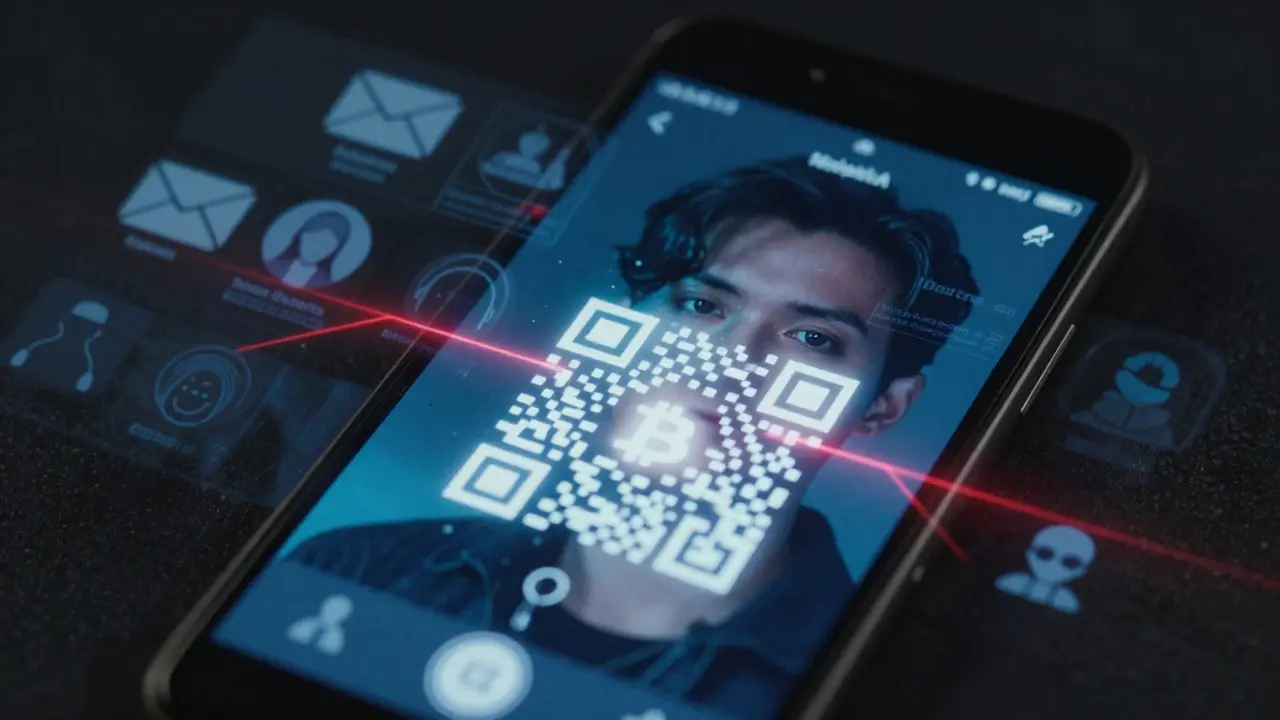
The Bigger Picture: Why This Matters
This isn’t just about criminals. It’s about control. Governments and corporations want to know who owns what, when, and where. Crypto was supposed to change that. But without careful habits, it’s becoming another system of surveillance.
Regulators aren’t trying to ban crypto. They’re trying to bring it into the same system as banks. And to do that, they need to identify users. IP tracking and geolocation are the tools they’re using to make that happen.
If you want to keep your crypto activity private, you need to understand how the system works - not just the wallet app you’re using. You need to know how your device talks to the network. You need to treat your IP address like a password. Because in crypto, it is.
What’s Next? The Arms Race Continues
Privacy tools are getting better. New protocols like CoinJoin improvements, decentralized mixers, and layer-2 networks are emerging. But tracking tools are getting smarter too. Machine learning models now analyze transaction timing, network latency, and even device behavior to guess who owns a wallet.
By 2026, experts predict that 80% of Bitcoin transactions will be traceable through a combination of IP data, wallet clustering, and behavioral analysis - even without KYC.
The only defense? Awareness. Discipline. And understanding that anonymity isn’t automatic. It’s earned - one careful step at a time.
Althea Gwen
December 3, 2025 AT 15:39Steve Savage
December 3, 2025 AT 15:42Joe B.
December 5, 2025 AT 13:08Tatiana Rodriguez
December 5, 2025 AT 16:13justin allen
December 7, 2025 AT 11:58samuel goodge
December 9, 2025 AT 09:55Durgesh Mehta
December 10, 2025 AT 22:31Sarah Roberge
December 12, 2025 AT 18:23Jess Bothun-Berg
December 13, 2025 AT 20:08Nora Colombie
December 14, 2025 AT 22:11Mani Kumar
December 15, 2025 AT 19:04Sharmishtha Sohoni
December 16, 2025 AT 16:17Rod Filoteo
December 18, 2025 AT 03:10Layla Hu
December 18, 2025 AT 08:00Greer Dauphin
December 19, 2025 AT 02:32Bhoomika Agarwal
December 19, 2025 AT 08:13Katherine Alva
December 19, 2025 AT 19:27Nelia Mcquiston
December 21, 2025 AT 02:41