
Is crypto regulated in Iran? The answer isn’t yes or no-it’s controlled. Iran doesn’t just regulate cryptocurrency; it owns it. Since 2025, every transaction, every wallet, every miner has been dragged into a state-run system designed to monitor, restrict, and redirect digital asset flows. This isn’t about banning crypto-it’s about making sure the government controls every byte of it.
How Iran’s Crypto Rules Changed in 2025
Before 2025, Iranians traded crypto like any other global market. Bitcoin, Ethereum, Tether-you could buy it, sell it, mine it. But on December 27, 2024, everything flipped. The Central Bank of Iran (CBI) cut off all cryptocurrency-to-rial payment channels. That meant no more linking your Iranian bank account to Nobitex, Hami, or any local exchange. Overnight, the on-ramp vanished.
Then in January 2025, President Masoud Pezeshkian signed a new directive. It wasn’t a ban. It was a takeover. The CBI became the only legal gatekeeper. All crypto platforms had to connect to government-approved payment systems. Every trade had to be visible. Every user had to be verified. No more anonymity. No more private wallets. If you wanted to trade, you had to walk through a door the state built-and it had cameras.
What You Can and Can’t Do in 2026
Here’s what’s allowed in Iran right now:
- You can own Bitcoin, Ethereum, or Dogecoin-but you can’t use them to pay for groceries, rent, or gas.
- You can mine crypto, but only if you get a license from the CBI. And even then, you must sell all your coins directly to the bank at fixed prices.
- You can use stablecoins like USDT or DAI-but only up to $5,000 bought per year and $10,000 held at any time. That limit hit hard. For many Iranians, stablecoins were their only shield against the rial’s freefall. Now, that shield is half its size.
- You can trade on local exchanges like Nobitex-but only after submitting your ID, phone number, and national ID card. The approval process takes 3-5 business days.
Here’s what’s banned:
- Advertising crypto in any form. No YouTube videos. No Instagram posts. No billboards. Even mentioning Bitcoin in a public post can get you flagged.
- Using foreign exchanges without government permission. Accessing Binance, Kraken, or Coinbase via VPN is technically illegal.
- Mining without a license. Unauthorized miners-often running rigs in basements or garages-are being raided. Power bills for these operations are now monitored by the state.
- Transferring crypto out of Iran without CBI approval. Sending Bitcoin to a friend abroad? That’s a red flag.
The National Digital Currency: Rial Currency
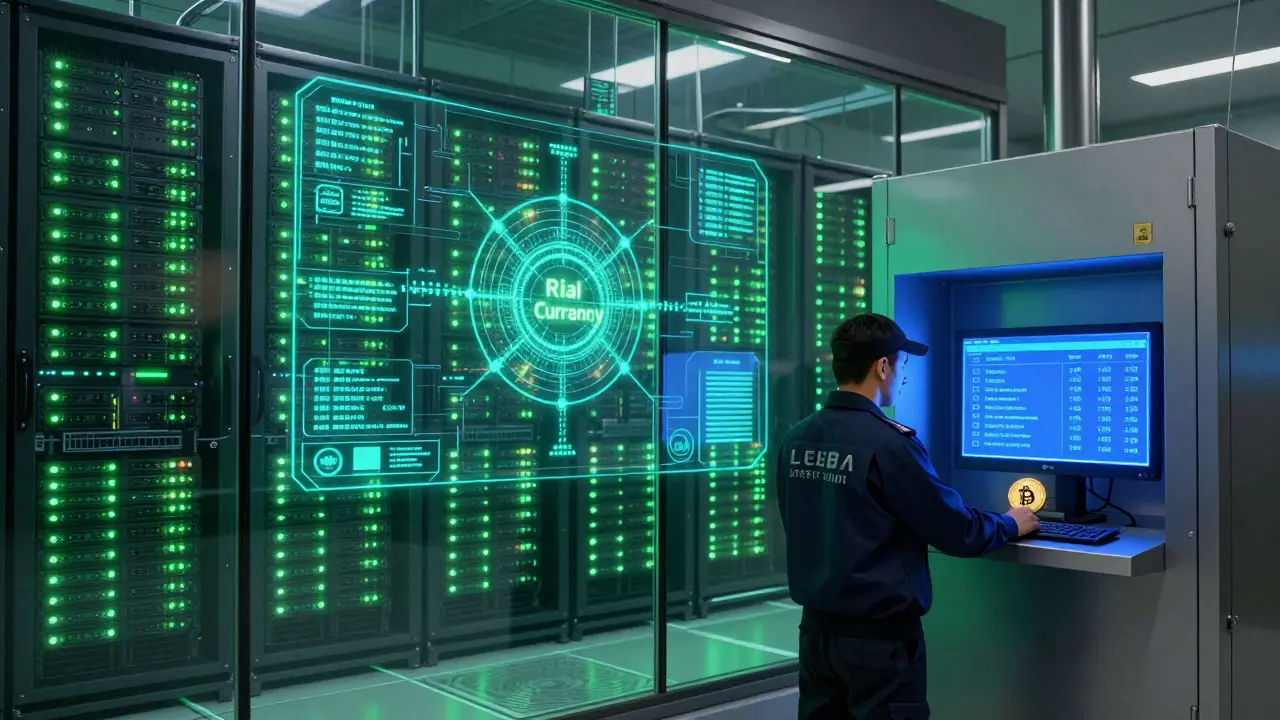
While the government restricts Bitcoin and Ethereum, it’s pushing its own digital currency: Rial Currency. Unlike Bitcoin, this isn’t decentralized. It’s not mined. It’s not public. It’s just an electronic version of the Iranian rial, controlled entirely by the Central Bank.
Think of it like a digital banknote. You can’t create more of it. You can’t trade it for other coins. You can only use it to send money between Iranian accounts. The CBI plans to expand its use to retail payments by mid-2026-meaning your next grocery bill might be paid in Rial Currency, not cash or credit.
Why does this matter? Because it’s the government’s answer to the question: How do we stop people from using crypto to bypass sanctions, while still letting them use digital money? The answer: make your own version, and make sure it’s trackable.

Why Stablecoins Got Hit So Hard
Stablecoins like Tether (USDT) were Iran’s financial lifeline. When the rial dropped 30% in a year, people turned to USDT to protect their savings. It was the closest thing to dollars most Iranians could access.
Then, on July 2, 2025, Tether froze 42 Iranian-linked wallet addresses-more than half tied to Nobitex. The move wasn’t random. It was tied to U.S. sanctions and concerns that Iranian entities were using crypto to fund sanctioned groups. The result? Panic.
Within weeks, Iranian traders shifted to DAI, a decentralized stablecoin built on the Polygon network. Why? Because DAI doesn’t rely on a single company like Tether to control its supply. It’s governed by code, not a corporation. And unlike USDT, it can’t be frozen by a U.S.-based entity.
By Q3 2025, DAI’s share of Iranian stablecoin trading jumped from 35% to over 60%. It’s now the de facto currency for Iranians trying to preserve value. But even DAI isn’t safe. The CBI has started monitoring Polygon transactions and is exploring ways to block them too.
The Hidden Cost: Taxes and Surveillance
In August 2025, Iran introduced its first capital gains tax on crypto profits. Yes, you read that right. If you bought Bitcoin at $20,000 and sold it at $40,000, you now owe taxes on the $20,000 profit. The Ministry of Economic Affairs and Finance plans to integrate crypto tax reporting into existing systems by mid-2026.
But the bigger issue isn’t taxes-it’s surveillance. The CBI has direct, real-time access to every transaction on government-approved platforms. They know who you traded with, how much, when, and from which device. TRM Labs called it “unprecedented state surveillance.”
For some, this is a relief. Before 2025, accounts were frozen randomly. Now, if you follow the rules, your funds stay safe. But for others, it’s a prison. No privacy. No freedom. Just compliance.
How Iranians Are Working Around the Rules
Despite the crackdown, crypto didn’t die in Iran. It went underground-and got smarter.
- VPNs and foreign exchanges: About 60% of crypto trading still happens outside Iran’s system. People use VPNs to access Binance, KuCoin, or OKX. They deposit via peer-to-peer (P2P) trades with foreign users.
- Hardware wallets: Many now store Bitcoin in Ledger or Trezor devices, keeping keys offline and away from government monitoring.
- DAI on Polygon: As mentioned, DAI is now the preferred stablecoin. Users send it through decentralized bridges and avoid centralized exchanges entirely.
- Barter networks: Some traders skip crypto altogether. They exchange goods-electronics, gold, even used cars-for crypto held by others.
One Reddit user in October 2025 said: “The new system adds 3-5% fees, but at least I know my account won’t vanish overnight.” Another complained: “The $10,000 limit makes it impossible to hedge against inflation. My rent went up 20% last month. I can’t even buy enough DAI to cover it.”
The Bigger Picture: Sanctions and Survival
Iran’s crypto rules aren’t just about money. They’re about survival.
International sanctions cut Iran off from SWIFT, Visa, and Mastercard. Crypto became the workaround. It’s how Iranians buy medicine, pay for online courses, or receive money from family abroad.
But the U.S. and EU see crypto as a loophole. That’s why Tether froze those wallets. That’s why the UN “snapback” mechanism triggered the stablecoin limits in September 2025. Iran’s response? Tighten control. Monitor everything. Tax everything. And build its own system.
Analysts warn this could backfire. If the government makes crypto too hard to use, people will abandon it. But if they leave it too open, they risk renewed sanctions. The result? A fragile balance.
What’s Next in 2026?
Here’s what’s coming:
- The Rial Currency will expand to retail payments-think gas stations, pharmacies, public transit.
- Enforcement against unauthorized mining will increase. Power outages in major cities may return as the government shuts down illegal rigs.
- DAI’s dominance will grow. By Q4 2026, it could make up 70% of Iranian stablecoin use.
- More P2P trading will move to decentralized platforms like Uniswap or SushiSwap, bypassing Iranian exchanges entirely.
- If nuclear deal talks restart, sanctions could ease-and with them, crypto restrictions.
One thing is clear: Iran won’t abandon crypto. It will keep shaping it-until the government owns every coin, every transaction, every user.
Is cryptocurrency legal in Iran?
Cryptocurrency is not banned in Iran, but it is heavily regulated. You can own and trade Bitcoin, Ethereum, and other coins, but only through government-approved platforms. All transactions must go through the Central Bank of Iran’s systems, and users must be fully verified. Mining is allowed only with a license, and you must sell all mined coins to the bank.
Can I use Bitcoin to buy things in Iran?
No. Bitcoin and other cryptocurrencies cannot be used to pay for goods or services within Iran. The government only recognizes the rial and its digital version, Rial Currency, for transactions. Crypto is treated as an asset, not a currency, and can only be traded for other crypto or converted back to rials through approved channels.
What happens if I use a VPN to access Binance or Kraken?
Using a VPN to access foreign exchanges is technically against Iranian regulations. While enforcement is inconsistent, authorities have started monitoring internet traffic for signs of crypto activity. If caught, you could face fines, account freezes on local exchanges, or even legal pressure. Many users still do it-but they accept the risk.
Why did Tether freeze Iranian wallets in 2025?
Tether froze 42 Iranian-linked addresses in July 2025 due to U.S. sanctions and concerns that some of these wallets were connected to entities tied to the Islamic Revolutionary Guard Corps (IRGC). This move was part of broader efforts by Western financial institutions to block crypto flows that could bypass international sanctions. The freeze triggered a mass shift toward DAI among Iranian users.
Can I mine Bitcoin in Iran legally?
Yes-but only if you get a license from the Central Bank of Iran. Licensed miners must sell all their mined Bitcoin directly to the CBI at fixed prices. The energy costs for mining are set so high that most find it unprofitable. As a result, many miners operate illegally, risking raids and power cutoffs. The government has cracked down hard on unauthorized mining since early 2025.
Is the Rial Currency the same as Bitcoin?
No. The Rial Currency is Iran’s official digital currency, backed by the Central Bank and pegged 1:1 to the paper rial. Unlike Bitcoin, it’s not decentralized, not mined, and not traded on open markets. It’s a government-controlled digital version of cash, meant to replace physical bills-not compete with Bitcoin.
What’s the daily crypto trading volume in Iran?
As of early 2026, Iran’s daily cryptocurrency trading volume is estimated at around $143 million, according to TRM Labs. However, about 60% of this activity occurs through unofficial channels like P2P networks and foreign exchanges accessed via VPN. Official, government-monitored trading accounts for the rest.
Do I have to pay taxes on crypto profits in Iran?
Yes. Since August 2025, Iran has imposed a capital gains tax on cryptocurrency profits. If you sell Bitcoin or another crypto for a profit, you’re required to report it and pay tax. The Ministry of Economic Affairs and Finance plans to fully integrate crypto tax reporting into the national system by mid-2026. Failure to report could lead to penalties.
Angelica Stovall
March 17, 2026 AT 08:26Bryan Roth
March 18, 2026 AT 12:48sai nikhil
March 18, 2026 AT 14:59Sahithi Reddy
March 19, 2026 AT 12:38George Hutchings
March 20, 2026 AT 11:18Henrique Lyma
March 21, 2026 AT 10:04Steph Andrews
March 21, 2026 AT 14:16Kira Dreamland
March 22, 2026 AT 11:26Sarah Hammon
March 23, 2026 AT 12:11Tony Weaver
March 24, 2026 AT 06:17Brenda White
March 24, 2026 AT 18:18Tobias Wriedt
March 26, 2026 AT 15:52Manali Sovani
March 26, 2026 AT 21:23Konakuze Christopher
March 28, 2026 AT 10:12S F
March 29, 2026 AT 07:55Prakash Patel
March 30, 2026 AT 07:20Zachary N
March 31, 2026 AT 22:27Elizabeth Kurtz
April 1, 2026 AT 23:01john peter
April 3, 2026 AT 04:05