Imagine you have a million dollars in cash. If you take $100,000 of it and set it on fire, the remaining $900,000 is now scarcer. In theory, that scarcity should make each remaining bill more valuable. This is the core logic behind token burning, a process where cryptocurrencies are permanently removed from circulation. It sounds simple, but under the hood, it involves complex smart contract logic, economic modeling, and security protocols that developers must get right.
You might see headlines about projects "burning" billions of tokens. But does this actually increase your wallet value? Not necessarily. To understand why, we need to look past the marketing hype and examine how these mechanisms are built, deployed, and managed in real-world blockchain environments.
The Mechanics of Permanent Removal
At its simplest level, burning a token means sending it to an address that no one can access. Think of it like throwing coins into the Mariana Trench. Once they’re gone, they’re gone. There is no private key to retrieve them.
In technical terms, this usually involves transferring tokens to a "burn address." On Ethereum-based networks, two common addresses serve this purpose:
0x0000000000000000000000000000000000000000(The null address)0x000000000000000000000000000000000000dEaD(A symbolic burn address)
When you send tokens to these addresses, the blockchain records the transaction as valid, but the funds become mathematically inaccessible. The total supply of the token decreases by the amount burned. This isn't just hiding tokens; it’s destroying them from the ledger’s perspective.
Why do projects do this? The primary goal is supply reduction to create scarcity. By lowering the circulating supply while demand remains constant or increases, basic economics suggests the price per token could rise. However, this assumes the burn is significant enough to matter and that the market perceives it as positive news.
Common Burn Strategies
Not all burns are created equal. Different projects use different strategies depending on their goals, budget, and community structure. Here are the most prevalent methods used in the industry today.
| Method | How It Works | Pros | Cons |
|---|---|---|---|
| Scheduled Burns | Fixed intervals (e.g., quarterly) based on a formula. | Predictable, builds trust over time. | Market often prices this in; limited short-term impact. |
| Transaction Fee Burning | A portion of every transaction fee is destroyed. | Automated, scales with network usage. | Complex to implement; depends on high activity. |
| Buyback and Burn | Project uses revenue to buy tokens from market, then burns them. | Directly reduces supply; shows financial health. | Costly for the project; risky during bear markets. |
| Community-Driven Burns | Holders voluntarily send tokens to burn addresses. | Engages users; decentralizes decision-making. | Unpredictable volume; relies on user participation. |
| One-Time Large Burns | A single massive event to remove a huge chunk of supply. | Creates immediate shock/attention. | Can cause volatility; no long-term structural change. |
Ethereum’s EIP-1559 is the gold standard for transaction fee burning. Activated in August 2021, it automatically burns the base fee of every transaction. This has resulted in millions of ETH being destroyed, making Ethereum occasionally deflationary during high-traffic periods. Binance’s BNB token uses a scheduled burn model, aiming to reduce supply by 50% over time through quarterly events.
Implementing a Burn Mechanism: A Developer’s View
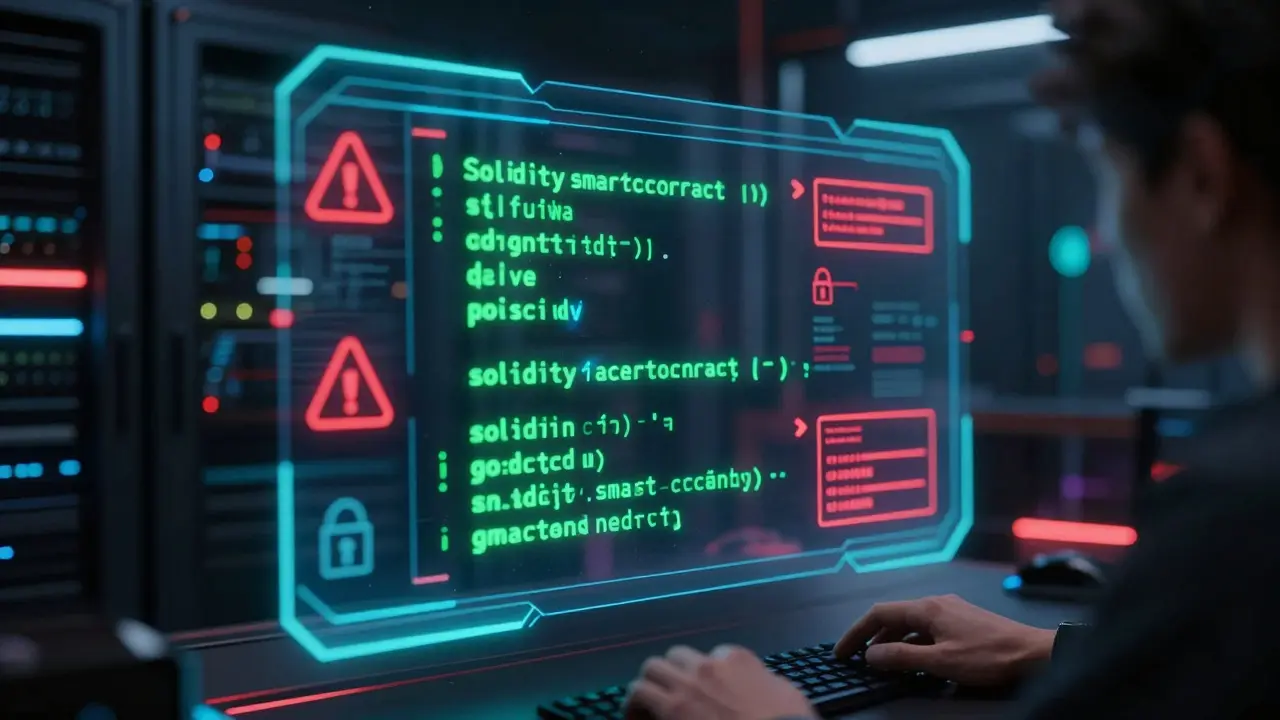
If you are building a token, adding a burn function seems easy. Just write a line of code that sends tokens to the null address. But in practice, security and control are paramount. You don’t want accidental burns, nor do you want malicious actors triggering burns to manipulate the price.
Here is a simplified step-by-step approach for implementing a secure burn mechanism in a Solidity smart contract (for ERC-20 tokens):
- Define the Burn Function: Create a function named
burn(uint256 amount). This function should check if the sender has enough balance before proceeding. - Update Balances: Subtract the
amountfrom the sender’s balance using_balances[msg.sender] -= amount;. - Reduce Total Supply: Crucially, you must also subtract the
amountfrom the global_totalSupplyvariable. If you skip this, the tokens are hidden but not truly burned from the protocol’s view. - Emit Events: Trigger a
Burn(address indexed from, uint256 amount)event. This allows block explorers and wallets to track when burns happen. - Add Access Controls: Decide who can call this function. Is it anyone? Only the contract owner? Or only via a DAO vote? Use modifiers like
onlyOwneroronlyGovernanceto restrict access.
For example, a basic snippet looks like this:
function burn(uint256 _amount) public {
    require(_amount > 0, "Cannot burn zero");
    require(balanceOf(msg.sender) >= _amount, "Insufficient balance");

    balanceOf[msg.sender] -= _amount;
    totalSupply_ -= _amount;
    emit Burn(msg.sender, _amount);
}
Before deploying, you must test this extensively. Sending tokens to the wrong address-or failing to update the total supply-can lead to permanent errors. Always engage a professional audit firm to review your code. In 2022, a bug in a burn interface accidentally locked $2.3 million in user funds because the contract didn’t properly verify the recipient address.
The Reality Check: Does Burning Increase Price?
This is the question everyone asks. The short answer is: sometimes, but not always. And certainly not instantly.
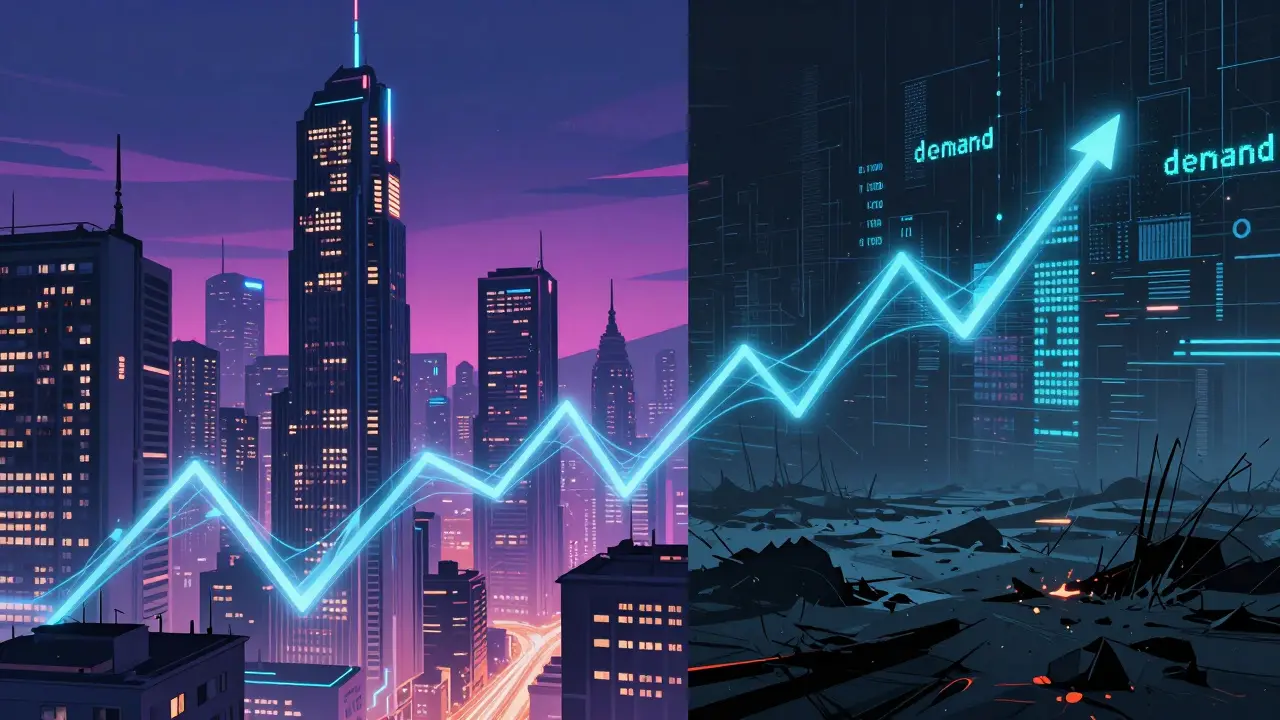
Many investors believe that fewer tokens automatically mean higher prices. However, a 2021 study by the University of Cambridge analyzed 127 token burn events and found that only 32% showed a statistically significant price increase within seven days. Why? Because price is driven by demand, not just supply.
If a project burns 10% of its supply but nobody wants to use the token, the price won’t move. Conversely, if a project burns a small amount but launches a popular new feature, the price might surge due to utility, not the burn itself.
Dr. Garrick Hileman from Blockchain.com noted that burn impact depends heavily on token velocity and market conditions. During a bull market, burns are celebrated as positive signals. In a bear market, they may be ignored or even viewed skeptically if investors suspect the project is trying to mask poor fundamentals.
Risks and Regulatory Concerns
As burn mechanisms become more common, regulators are taking notice. In February 2023, the U.S. Securities and Exchange Commission (SEC) hinted that aggressive buyback-and-burn programs could be seen as unregistered securities transactions if they appear designed to manipulate prices.
Projects must be transparent about their burn policies. Hidden burns or sudden changes to burn rates can erode trust. For instance, some meme coins promised large burns but failed to execute them, leading to community backlash and legal action.
Additionally, there’s a risk of over-reliance on burns. If a project’s main value proposition is "we burn tokens," it lacks sustainable utility. Long-term viability requires real-world use cases-like payments, governance, or staking rewards-not just artificial scarcity.
Future Trends in Token Economics
We are moving beyond simple burns. The next generation of tokenomics integrates burning with other mechanisms. "Burn-to-access" models are emerging, where users burn tokens to unlock premium features or enter exclusive communities. This creates a direct link between token destruction and utility.
Also, dynamic burn models are gaining traction. Instead of fixed schedules, some protocols adjust burn rates based on network activity or profitability. Chainlink’s proposed "burn-and-mint equilibrium" aims to stabilize supply by burning when demand is high and minting when liquidity is needed.
As blockchain technology matures, expect burns to become more sophisticated, automated, and tied directly to ecosystem growth rather than just marketing stunts.
What is a burn address in crypto?
A burn address is a specific wallet address on a blockchain that has no known private key. When tokens are sent there, they cannot be retrieved or spent, effectively removing them from circulation forever.
Does burning tokens always increase the price?
No. While burning reduces supply, price is determined by both supply and demand. If demand doesn’t increase, the price may remain stable or even drop. Market sentiment and utility play larger roles than supply alone.
How does Ethereum’s EIP-1559 burn work?
EIP-1559 modifies Ethereum’s fee structure so that the base fee of every transaction is burned instead of going to miners. This makes Ethereum deflationary during periods of high network congestion.
Can I burn my own tokens?
Yes, if the token’s smart contract includes a public burn function. Many tokens allow holders to send their tokens to a designated burn address. Check the token’s documentation or website for instructions.
Is token burning legal?
Generally, yes. However, regulators like the SEC monitor aggressive buyback-and-burn schemes to ensure they aren’t used to manipulate prices illegally. Transparency is key to staying compliant.
Albert Lee
May 12, 2026 AT 09:04Wow, this is such a fantastic breakdown of token burns! 🌟 I've been trying to wrap my head around the economics of it all, and this really helps clarify why supply isn't the only factor. It's so important to remember that utility drives value, not just scarcity. Thanks for sharing this insight!
Matt Davis
May 13, 2026 AT 19:08You are completely missing the point here. The entire premise of burning tokens as a value driver is fundamentally flawed and intellectually lazy. It is nothing more than a psychological trick designed to manipulate retail investors into buying high during hype cycles. The mathematics do not support the notion that destruction equals value without concurrent demand growth.
Tobias Gjerlufsen
May 15, 2026 AT 18:36honestly most of these projects are just scams dressed up in fancy whitepapers you think you understand but you dont because you are reading marketing fluff instead of the actual code base which is usually riddled with vulnerabilities and backdoors that allow the devs to dump on you
Ankush Pokarana
May 16, 2026 AT 03:23it is interesting to consider the philosophical implications of digital scarcity we often assume that less means more but in a decentralized ecosystem the value is derived from the network effect and the utility provided by the participants rather than the mere existence of the tokens themselves so perhaps the focus should be on building robust infrastructure rather than manipulating supply metrics
Bianca Vilas Boas Lourenço
May 16, 2026 AT 15:04Ugh, another article pretending to be educational while just feeding the narrative 😒 Like, duh, burning doesn't always mean price goes up? Who thought that was a secret? I'm tired of seeing these basic concepts repackaged as 'insider knowledge' when it's just common sense mixed with wishful thinking 💔
Ellie Riddell
May 17, 2026 AT 04:43Sure, let's pretend that setting fire to digital numbers has any real-world impact beyond making chartists happy. It's like watching people cheer because they painted their car a different color; the engine is still the same broken mess. But hey, keep telling yourself that scarcity equals value if it makes you feel better about your bags.
Jesse Alston
May 17, 2026 AT 20:58This is a great overview! One thing to add is that developers need to be very careful with the access controls mentioned in step 5. If you make the burn function public, anyone can call it, which might not be what you want for a scheduled burn mechanism. Always double-check your modifiers! 🔧📚
Sharada Vakkund
May 19, 2026 AT 09:58I love how this post breaks down the technical aspects for everyone. It's so important that we demystify these processes so that the community can participate more informedly. Whether you're a developer or an investor, understanding the mechanics helps us build a healthier ecosystem together! 🌱
Sudarshan Anbazhagan
May 21, 2026 AT 07:15the author fails to recognize the profound lack of sophistication in this analysis one must understand that true economic models require a deep understanding of game theory and behavioral economics which are largely absent in this superficial treatment of tokenomics thus rendering the advice somewhat naive for serious practitioners
John Gonzalez Bentham
May 23, 2026 AT 03:39typical crypto bro content ignoring the fact that most burns are just accounting tricks to pump the chart temporarily until the whales decide to sell again its all rigged anyway so why bother reading this garbage
Ruben Michel
May 23, 2026 AT 23:00The implementation details provided are rudimentary at best. A truly sophisticated approach would involve integrating zero-knowledge proofs to verify burns without revealing specific transaction data, thereby enhancing privacy while maintaining transparency. Furthermore, the reliance on simple ERC-20 standards ignores the evolving landscape of cross-chain interoperability protocols.
Gavin Wonnacott
May 23, 2026 AT 23:11You dare to suggest that this is complex? It is child's play for anyone who has spent more than five minutes looking at Solidity documentation. The arrogance of presenting this basic snippet as a guide is insulting to anyone with actual engineering experience. Do better.
Samara McCallum
May 24, 2026 AT 19:21i mean sure burns exist but like do they really matter in the grand scheme of things probably not because the market is driven by emotions and narratives rather than hard economic principles so we are just dancing around the edges of reality here
Sheldon Friesen
May 25, 2026 AT 00:54Great points here! However, I'd argue that the 'Community-Driven Burns' section needs more nuance. While it decentralizes decision-making, it often leads to low participation unless incentivized properly. We need to look at mechanisms that align individual incentives with collective goals more effectively! 🎯
Destiny Kilby
May 25, 2026 AT 12:27It is quite concerning how many projects ignore the regulatory risks mentioned here the SEC is watching closely and transparency is not just a buzzword but a legal necessity for survival in this space
Jerry CUNNINGHAM SR
May 27, 2026 AT 02:13This is a well-reasoned article that provides clarity on a often misunderstood topic. It is crucial for developers and investors alike to appreciate the distinction between marketing-driven burns and those integrated into sustainable economic models. Thank you for fostering a more informed discussion.
Shelby Cantu
May 28, 2026 AT 01:46Keep it simple. Utility first. Burns second. Don't get distracted by the hype.
Kimberly Herbstritt
May 29, 2026 AT 14:05I have to disagree with the idea that burns are inherently positive. In many cases, they are just a way for teams to signal confidence without actually delivering product updates. It's a cheap parlor trick that doesn't address the core issues of usability and adoption.
Sarah C
May 31, 2026 AT 03:42I really appreciate the detailed explanation of the different burn strategies. It helps to see the pros and cons laid out clearly so we can evaluate projects more critically. Collaboration and transparency are key to building trust in these mechanisms!
Samara McCallum
May 31, 2026 AT 08:47but like if the project is useless burning tokens won't save it right it's just destroying potential liquidity that could have been used for something else maybe even charity or whatever