
China officially banned cryptocurrency trading and mining in 2021. Banks can't touch it. Exchanges like Binance and Coinbase are blocked. Yet, Chinese traders moved $86.4 billion in crypto between July 2022 and June 2023. That’s more than Hong Kong, where crypto is legal. How? Because the rules aren’t what they seem.
What’s Actually Banned - and What Isn’t
The Chinese government doesn’t ban owning Bitcoin or Ethereum. You can hold it. Courts even called it "legal property" in 2025. But if you trade it? Buy, sell, swap, or use a platform? That’s illegal. Mining? Shut down. Exchanges? Blocked. Banks? Forbidden from processing any crypto-related payments. This contradiction is the engine behind the underground market. People aren’t breaking the law by holding crypto. They’re breaking it by moving it. That’s why traders don’t use apps like Coinbase. They use people.How the Underground Market Works
There’s no app store for crypto in China. No Binance app. No Kraken login. Instead, traders rely on three things: P2P networks, OTC brokers, and Hong Kong. Peer-to-peer (P2P) trading means you find someone else - often through Telegram, WeChat, or Reddit - and trade directly. One person sends yuan. The other sends Bitcoin. No middleman. No exchange. Just two people trusting each other. Escrow services help. If one side runs off, the escrow holds the funds until proof is shown. But if the escrow gets raided? You’re out of luck. Over-the-counter (OTC) brokers are the next layer. These aren’t random guys on the street. They’re organized. Some have offices in Shenzhen or Guangzhou. They connect buyers with sellers, handle large sums, and use fake invoices or trade receipts to move money without raising red flags. A single OTC broker might handle $5 million in crypto per month. Hong Kong is the bridge. It’s the only place where Chinese citizens can legally access global crypto markets. Many traders open bank accounts there. Some set up shell companies. Others use family members living in Hong Kong to receive crypto, then wire yuan back home. It’s messy. It’s slow. But it works.Why People Risk It
It’s not about getting rich overnight. It’s about survival. China’s stock market dropped 35% between 2021 and 2023. The CSI 300 index - the benchmark for big companies - is the worst-performing in the world. Earnings forecasts keep getting slashed. Real estate? Collapsing. Savings accounts? Interest rates below 1.5%. People are desperate. Crypto isn’t a gamble for most. It’s a hedge. Bitcoin and Ethereum are seen as alternatives to the yuan. Stablecoins like USDT and USDC are used as a bridge - convert yuan to USDT, hold it, then convert back when the yuan weakens. It’s not speculation. It’s preservation. A 2025 Chainalysis report found that nearly 7% of all crypto transactions in China were over $10,000. The global average? 3.6%. This isn’t casual trading. It’s institutional behavior - just without the institutions.
The Real Risks
You think it’s safe because you’re not mining or running an exchange? Think again. Legal risk? Real. In 2024, a trader in Hangzhou was fined 200,000 yuan and had his bank account frozen for using a P2P app. Another in Chengdu got a suspended jail sentence for facilitating OTC trades. Enforcement isn’t constant - but it’s unpredictable. One day, nothing. The next, your phone gets pinged by police. Financial risk? Higher. If your OTC broker disappears with your $50,000? No recourse. No insurance. No FDIC. If your VPN gets blocked? You lose access. If your Hong Kong bank account gets flagged? Your funds get locked for months. Operational risk? Constant. You need three VPNs running at once. One for access. One for backup. One for emergencies. You need to rotate phone numbers. You need to avoid using your real ID on any platform. You need to know which WeChat groups are safe - and which are honeypots. And then there’s the psychological toll. Traders describe it as living with a secret. You can’t talk about it with friends. You can’t trust your bank. You wake up every morning wondering if today’s the day they come for you.What’s Changing in 2026
Shanghai regulators are quietly talking about regulating stablecoins. Not Bitcoin. Not Ethereum. But USDT, USDC - the digital dollars that keep the underground market alive. That’s a signal. Not a change. But a possibility. If China allows regulated stablecoins, it could mean a controlled backdoor into crypto. Not full legalization. Not freedom. But a monitored channel. Think of it like water pipes: the government doesn’t want you drinking from the river. But maybe, just maybe, they’ll let you use a filtered tap. Meanwhile, the digital yuan (e-CNY) keeps expanding. Every city now has it. Every government employee gets paid in it. The goal? Replace cash. Replace crypto. Control every transaction. But the underground market isn’t dying. It’s adapting. More traders are using decentralized wallets. More are routing through Southeast Asia. More are using AI tools to detect crackdown patterns before they happen.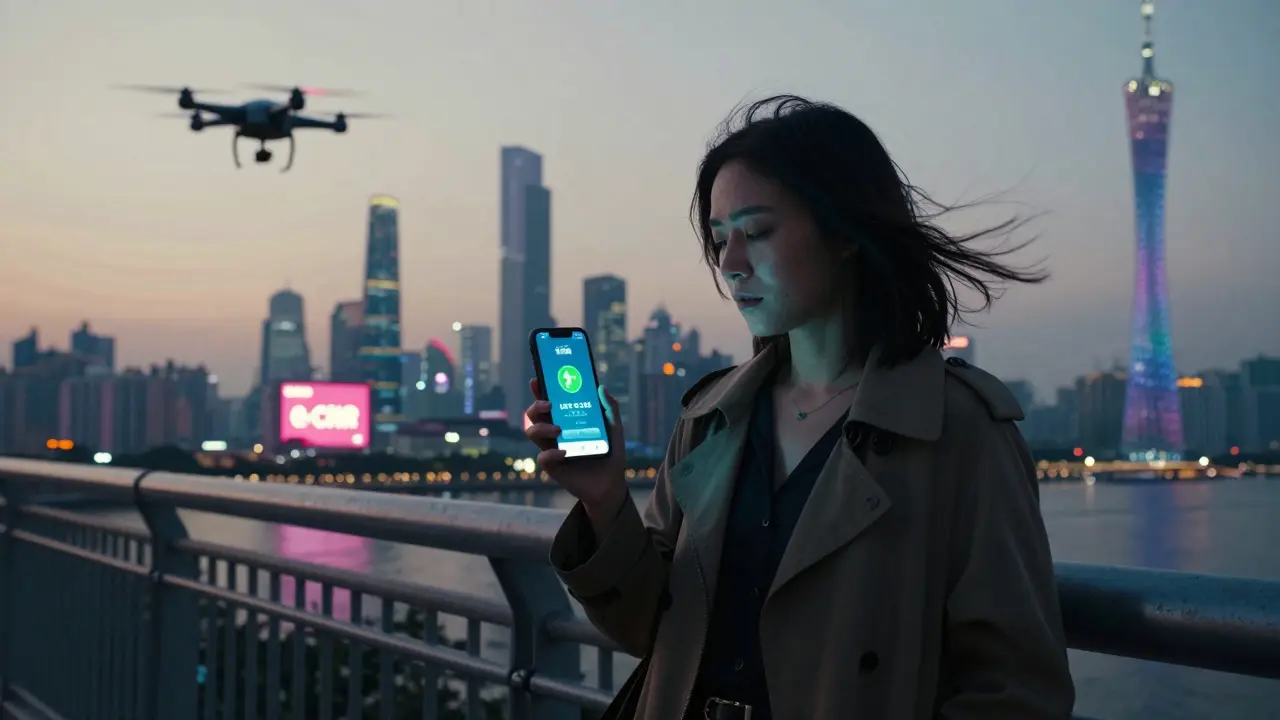
Who’s Still Trading?
Three groups dominate:- High-net-worth individuals - They use Hong Kong corporate structures, private banks, and professional OTC desks. They move millions. They have lawyers.
- Professional traders - They run bot networks, track global price gaps, and exploit time zone differences. They trade between Shanghai’s market close and New York’s open.
- Everyday investors - They’re the ones sending $5,000 to a cousin in Macau. They use QR codes. They trust WhatsApp groups. They don’t know the risks - but they know the yuan is losing value.
Is This Sustainable?
Yes - but not forever. The underground market thrives because China’s economy is stuck. No real returns. No safety. No trust in the system. As long as that’s true, people will find a way. But enforcement is tightening. More surveillance. More AI monitoring of bank transfers. More cooperation between mainland and Hong Kong authorities. The tools are getting better. The risks are growing. The real question isn’t whether crypto will survive in China. It’s whether the government will let people keep their money - or if it will lock everything down completely. For now, the market is alive. It’s huge. And it’s running on one thing: desperation.Is it legal to own Bitcoin in China?
Yes, owning Bitcoin or Ethereum is not illegal. Chinese courts have ruled that digital assets are "legal property." But you cannot trade them, use exchanges, or mine them. Holding is allowed. Moving is not.
How do people trade crypto in China if it’s banned?
Traders use peer-to-peer (P2P) networks, over-the-counter (OTC) brokers, and Hong Kong-based bank accounts. They often use VPNs to access international platforms and stablecoins like USDT to avoid direct yuan-to-crypto conversions. Transactions are done offline, through WeChat or Telegram, with escrow services to reduce risk.
What happens if you get caught trading crypto in China?
Penalties vary. You could face fines, frozen bank accounts, or even criminal charges if you’re seen as running a commercial operation. Casual traders are rarely prosecuted, but enforcement has increased since 2024. There’s no public record of punishments, so risks are unpredictable.
Why is the underground crypto market so big in China?
China’s traditional markets are performing poorly. The stock market fell 35% from 2021 to 2023. Real estate collapsed. Savings accounts pay almost nothing. Crypto offers a way to preserve wealth outside the yuan. With no other options, millions turn to crypto - even if it’s risky.
Could China legalize crypto in the future?
Not in the way the West expects. China is more likely to approve regulated stablecoins tied to the digital yuan (e-CNY), not Bitcoin or Ethereum. The goal isn’t decentralization - it’s control. Any future legal access will be tightly monitored and limited to state-approved assets.
Sharon Tuck
March 10, 2026 AT 06:01It's wild how people just adapt, isn't it? No app? No problem. They find each other. A QR code. A WeChat group. A cousin in Macau. It’s not about tech-it’s about trust, even when the system tries to erase it.
I’ve seen this in other contexts too-when governments overreach, humanity just bends. Not break. Bend.
Sherry Kirkham
March 11, 2026 AT 12:19Desperation isn’t a gamble. It’s arithmetic. When your savings lose 12% a year to inflation and your home’s worth half what you paid, crypto isn’t speculation-it’s survival math. The state didn’t ban Bitcoin. It banned hope.
And now they’re trying to replace it with a digital yuan? A ledger with a leash. How poetic.
Bill Pommier
March 11, 2026 AT 21:18Let me be clear: this is not a market. This is a criminal enterprise masquerading as financial innovation. The fact that people are risking jail time for peer-to-peer trades is not admirable-it is reckless and irresponsible. There are laws for a reason, and China is not wrong to enforce them.
Olivia Parsons
March 12, 2026 AT 20:07I’ve been reading up on this for months. What’s interesting is how stablecoins became the real currency-not Bitcoin. USDT is the unofficial yuan hedge. It’s not about decentralization. It’s about stability. That’s the real story here.
Nick Greening
March 14, 2026 AT 05:56Wow so China bans crypto but everyone’s still doing it? Shocking. Next you’ll tell me water is wet. I mean, if you outlaw something, people will do it anyway. That’s like, basic human nature. Duh.
Issack Vaid
March 15, 2026 AT 17:32It’s fascinating how the state’s control mechanisms are being subverted not by hackers, but by grandmothers sending QR codes to their grandchildren. This isn’t rebellion-it’s quiet, persistent civil disobedience. And it’s working.
Ironically, the digital yuan may be the very tool that makes this underground economy more visible. Surveillance isn’t the opposite of freedom. Sometimes, it’s its mirror.
Shawn Warren
March 16, 2026 AT 00:29People are resilient. They find ways. That’s all. No drama. No politics. Just people trying to protect what little they have. That’s all you need to know.
Keep going. Stay strong. The system doesn’t own you.
Jackson Dambz
March 16, 2026 AT 19:1886 billion? Really? That’s less than what one hedge fund moves in a week. This is not a market. It’s a sideshow. The real story is how little impact this actually has on global finance. Stop exaggerating.
Megan Lutz
March 18, 2026 AT 12:53Hold on. You say courts called crypto 'legal property' but trading is illegal? That’s not a contradiction-it’s a legal loophole designed to confuse and intimidate. The state wants the asset without the market. Classic authoritarian move.
They don’t want you to own Bitcoin. They want you to think you can-just not use it. That’s psychological control. And it’s working.
Jesse VanDerPol
March 19, 2026 AT 13:20I wonder how many of these traders have talked to their families about it. Or if they even can. The silence must be heavy. Not just from fear-but from grief. For the system they were told to believe in.
jonathan swift
March 19, 2026 AT 17:28THEY’RE USING AI TO PREDICT CRACKDOWNS?? 🤯 That’s not crypto-that’s a spy thriller. Next they’ll be using quantum encryption and drones to deliver wallets. The government is definitely deep in this. I’m telling you, this is all a psyop. 😈
Datta Yadav
March 20, 2026 AT 10:35Let me break this down with mathematical precision. China’s GDP growth has been declining since 2018, and the property market collapse has erased over $3 trillion in household wealth. With negative real interest rates on savings, crypto becomes the only rational hedge. The 7% of transactions over $10k? That’s not ‘institutional behavior’-that’s the middle class fleeing collapse. And you call that ‘desperation’? No. That’s economic literacy. The state is the irrational one.
Lydia Meier
March 22, 2026 AT 05:07This article is overly long. Too many subheadings. Too many unsupported claims. The $86.4 billion figure-source? Chainalysis? They’re a blockchain analytics firm with clear biases. And why are we assuming these traders aren’t laundering? The piece reads like advocacy, not journalism.
jay baravkar
March 23, 2026 AT 17:32You’re not alone. I know people doing this. They’re scared, yes-but they’re also proud. Proud they figured out a way to protect their future. That’s not criminal. That’s courageous. Keep going. Keep trusting. You’re building something real-even if no one sees it.
Jennifer Pilot
March 25, 2026 AT 02:34One must observe, with a certain degree of scholarly detachment, the ontological paradox at play: a state that criminalizes the movement of a legally recognized asset. One is left to wonder whether this is an act of legal absurdity, or perhaps, a performative assertion of sovereignty over the intangible.
Furthermore, the reliance upon P2P networks-those fragile, human-scale infrastructures of trust-reveals a deeper truth: that in the absence of institutional legitimacy, social capital becomes the only ledger. How profoundly… 19th-century.
And yet, one cannot help but feel a pang of melancholy. For what is a society that forces its citizens into clandestine economic acts, if not a society that has lost its moral compass? The digital yuan, for all its efficiency, is merely a gilded cage.
Ian Thomas
March 26, 2026 AT 04:06So the government wants to control every transaction… but they can’t control human desperation.
That’s the irony. The digital yuan is meant to replace cash. But cash was anonymous. The yuan is a surveillance tool. And yet people still risk jail to use crypto-because at least with Bitcoin, they’re not talking to a government server every time they move money.
It’s not about money. It’s about autonomy. And that’s why this won’t end. Not until they turn every citizen into a monitored node.