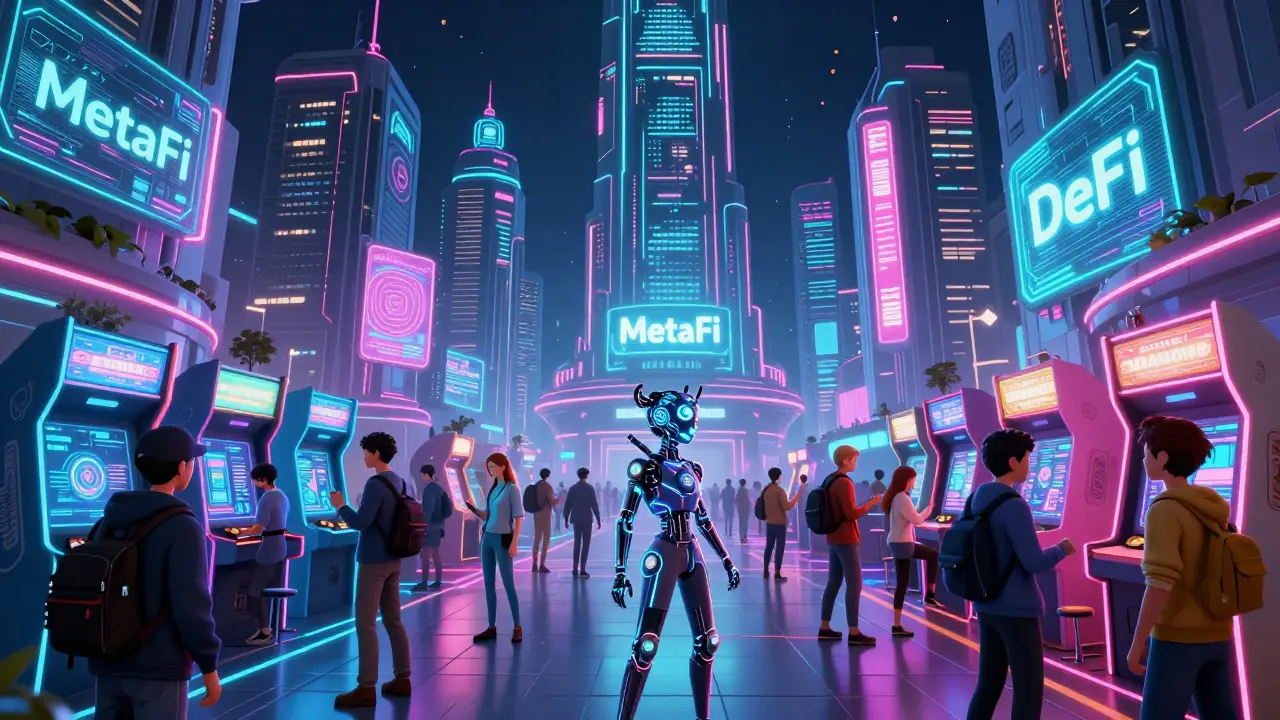
Remember the hype around "MetaFi"-that buzzword blending metaverse experiences with decentralized finance? BurgerCities (BURGER) was one of the projects that promised exactly that. It pitched itself as a place where you could game, socialize, and earn money all at once. But if you’ve been looking for it recently, you might have noticed something strange: the excitement has gone quiet.
So, what actually happened to BurgerCities? Is it still a viable investment, or is it a ghost project from the early days of the crypto boom? Let’s break down what this token is, how its economy was supposed to work, and why its current market status tells a very different story than its original promise.
The Core Concept: A One-Stop MetaFi Ecosystem
To understand BurgerCities, you first need to understand the term MetaFi. It’s a portmanteau of Metaverse and DeFi (Decentralized Finance). The idea was to create an immersive digital world where financial activities weren’t just transactions but part of a visual, interactive experience.
BurgerCities launched in September 2020, built on the BNB Chain (formerly Binance Smart Chain). This blockchain was chosen for its low transaction fees and high speed, which are crucial for gaming applications. The project didn’t start from scratch; it evolved from BurgerSwap, a decentralized exchange (DEX) that allowed users to swap tokens and earn liquidity rewards.
The vision was ambitious. Instead of just swapping tokens, users would enter a virtual city. They would use avatars to navigate NFT exhibitions, play games, and participate in financial markets simultaneously. The tagline "Born for metafi" captured this dual purpose: entertainment meets earning potential.
- Gaming: Play-to-earn mechanics where time spent in the ecosystem generated rewards.
- Socializing: Virtual spaces for users to interact via avatars.
- Finance: Direct access to staking, swapping, and liquidity provision within the same interface.
How the Economy Works: Dual-Token System
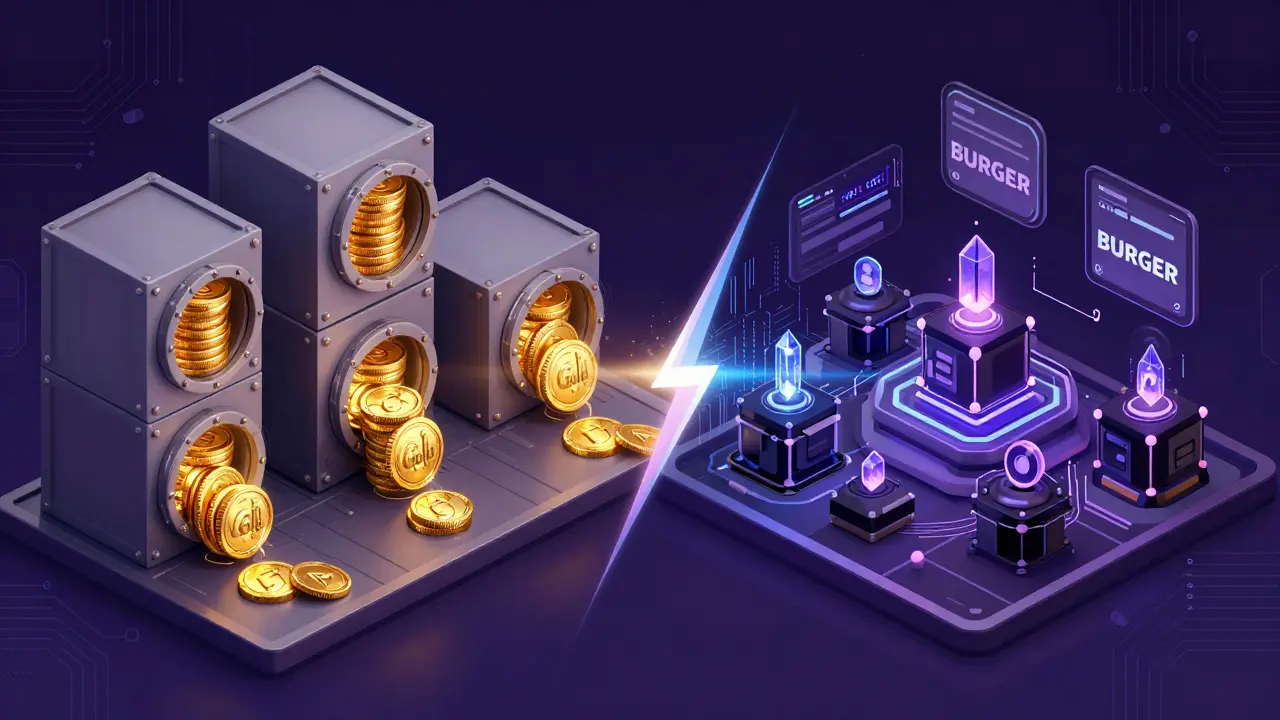
One of the most complex parts of any MetaFi project is its economy. BurgerCities implemented a dual-token system to separate speculative value from in-game utility. This is a common design pattern in successful blockchain games to prevent inflation from crashing the main currency.
- $BURGER (Governance & Utility): This is the native token of the ecosystem. You use it to vote on platform decisions, pay for premium features, buy NFTs, and provide liquidity. It holds the long-term value of the network.
- $Gold (In-Game Currency): This token serves as the primary currency for daily activities within the game. Players earn $Gold by playing, completing tasks, or winning competitions. It is designed to be consumed within the ecosystem rather than held for speculation.
This separation helps stabilize the game economy. If too much $Gold is printed through gameplay, it doesn’t directly devalue the $BURGER token, which relies on external market demand and governance utility.
Tokenomics: Deflationary Design vs. Reality
The economic model behind the BURGER token is technically deflationary. In theory, this means the total supply of tokens decreases over time. The protocol incorporates burn mechanisms-destroying tokens permanently during transactions or specific events-to create scarcity. Scarcity usually supports price appreciation if demand remains constant.
However, the numbers here are confusing because data sources vary significantly. Here is a comparison of the reported supply figures:
| Metric | Coinmerce Report | Coinpedia Market Data |
|---|---|---|
| Total/Max Supply | ~38 Million | 63,000,000 |
| Circulating Supply | N/A | 43,035,832 |
| Circulation Percentage | N/A | ~68.3% |
The discrepancy between 38 million and 63 million suggests either a change in tokenomics after launch or outdated reporting. Regardless of the exact number, the circulating supply represents only about two-thirds of the maximum. This means a significant portion of tokens are locked or unminted, which can affect future liquidity if those tokens are ever released.
The Price Crash: From to Cents
If you are researching BURGER for investment purposes, you need to look at its price history. It is a cautionary tale of extreme volatility in the altcoin market.
BURGER reached an All-Time High (ATH) of $28.01. For context, buying at that peak meant holding a token worth nearly thirty dollars. Today, the price hovers around $0.0006 to $0.0008. This represents a loss of approximately 99.997%.
Why did this happen?
- Liquidity Evaporation: Trading volume has dropped to near zero on major centralized exchanges like Binance. CoinMarketCap reports $0 USD in 24-hour volume on some pairs, meaning there are no active buyers or sellers.
- Market Sentiment Shift: The initial hype around MetaFi and play-to-earn faded as many projects failed to deliver sustainable economies.
- Anonymous Team: The founding team remained anonymous. While common in crypto, this lack of accountability often leads to lower trust during downturns.
The recovery from the All-Time Low (ATL) of $0.00076 is minimal. The deflationary burn mechanism, while theoretically sound, could not counteract the massive sell-off and loss of user interest.
Current Status: Is BurgerCities Dead?
This is the most critical question for anyone interested in the project today. Based on current data, BurgerCities appears to be in a dormant state.
There are no recent major announcements, updates, or community surges visible on mainstream crypto news platforms. The official website, BurgerCities.org, may still exist, but the active development seems to have stalled. The token is still listed on some exchanges like BingX, but the lack of trading activity means you might struggle to sell even small amounts without slipping the price significantly.
For a project to succeed in MetaFi, it needs continuous content updates, active player engagement, and regular economic adjustments. Without these, the ecosystem becomes empty. An empty metaverse has no value, regardless of how good the underlying technology was when it launched.
How to Buy BURGER (If You Still Want To)
If you decide to proceed despite the risks, here is how the process generally works. Note that due to low liquidity, prices may vary wildly between platforms.
- Create an Account: Sign up on a supported exchange like BingX or Coinmerce.
- Verify Identity: Complete KYC (Know Your Customer) requirements if required by the platform.
- Fund Wallet: Deposit USDT or BNB into your exchange wallet.
- Locate Pair: Search for the BURGER/USDT or BURGER/BNB trading pair.
- Execute Trade: Place a limit order to control your entry price, given the volatility.
- Withdraw: Transfer tokens to a secure non-custodial wallet (like Trust Wallet) for safety, though remember that withdrawing may incur BNB Chain gas fees.
Be aware that buying illiquid tokens carries the risk of being unable to exit your position later.
Risks and Red Flags
Before interacting with the BurgerCities ecosystem, consider these specific risks:
- Extreme Volatility: The 99.99% drop shows that the token can lose value rapidly.
- Liquidity Risk: With near-zero volume on major CEXs, you may face slippage or inability to sell.
- Smart Contract Risk: As with any DeFi project, bugs in the code could lead to losses. Always verify contract addresses.
- Project Abandonment: Lack of recent updates suggests the team may have moved on to other ventures.
Is BurgerCities (BURGER) a scam?
There is no evidence that BurgerCities was a fraudulent scheme designed to steal funds outright. However, it has failed to maintain its value or active user base. The massive price depreciation and lack of recent development suggest it is a failed project rather than a malicious scam. Investing in it now carries high risk due to illiquidity.
What blockchain is BURGER built on?
The BURGER token operates on the BNB Chain (formerly Binance Smart Chain). This allows for fast transactions and low fees, which is essential for its gaming and DeFi functionalities.
Can I still earn money with BurgerCities?
Technically, the platform still offers staking and play-to-earn mechanics. However, given the extremely low trading volume and lack of new users, the potential earnings are likely negligible compared to the risk of losing your principal investment. The economic engine appears to have stalled.
Why did the BURGER token price drop so much?
The price drop from $28.01 to under $0.001 was caused by a combination of factors: the broader market cooling off after the 2021 bull run, the failure of many MetaFi projects to sustain long-term engagement, and a complete evaporation of liquidity on major exchanges.
What is the difference between $BURGER and $Gold?
$BURGER is the governance and utility token used for voting, buying NFTs, and accessing platform features. $Gold is the in-game currency earned through gameplay and used for internal transactions within the metaverse. This dual-token structure aims to separate speculative value from game utility.