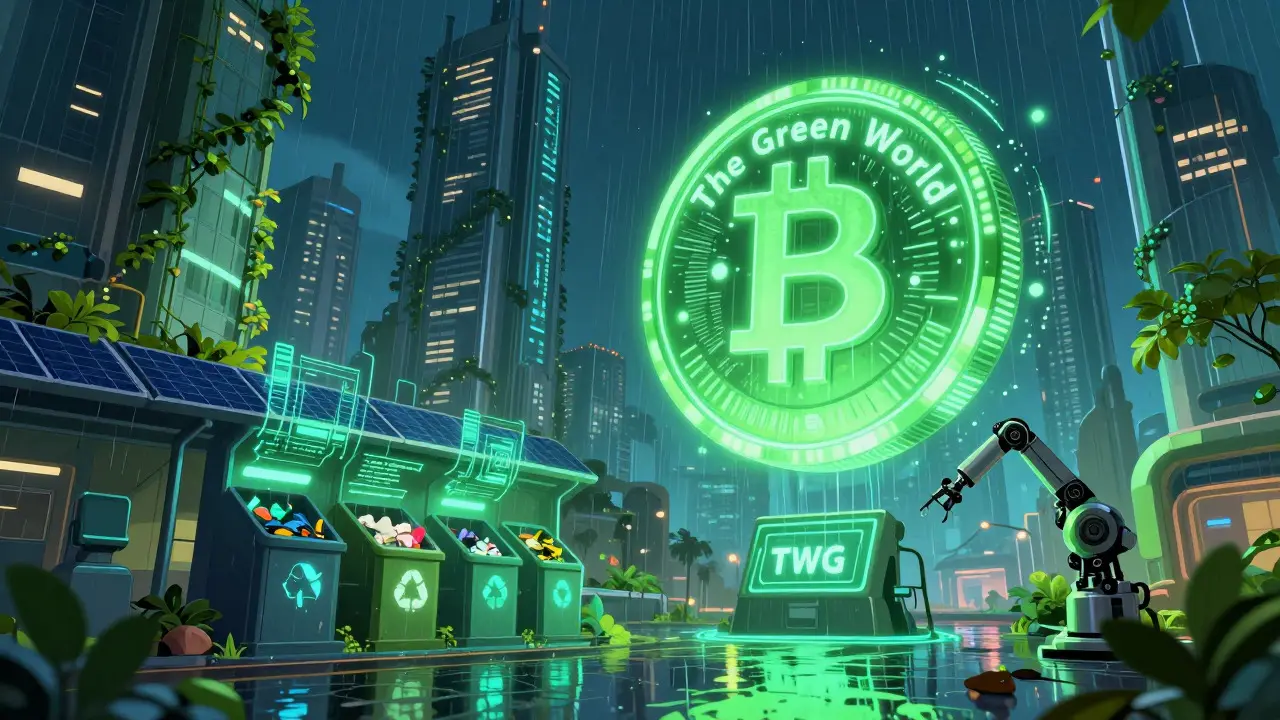
Most people assume that if a crypto token has a cool name and an eco-friendly mission, it must be a solid investment. The Green World (TGW) fits that description perfectly on paper. It’s a token built for environmental sustainability, launched in 2024 to support recycling incentives and renewable energy projects. But here’s the catch: the data behind this coin is messy, volatile, and often contradictory across major tracking platforms. If you’re looking at TGW because you want to get into "green" crypto, you need to look past the marketing buzzwords. This isn't a blue-chip asset like Bitcoin or Ethereum. It's a low-cap altcoin with specific risks attached to its liquidity and market presence. Let's break down what this token actually is, how it works, and what you really need to know before you even think about buying it.
What Exactly Is The Green World Token?
The Green World is a utility token designed to facilitate payments for eco-services. Think of it as a digital currency specifically tailored for the environmental sector. Its primary use cases include incentivizing recycling efforts and funding renewable energy initiatives. In theory, holding or spending TGW supports these causes, creating a direct link between your wallet and environmental impact. The token operates on the BNB Smart Chain, using the BEP20 standard. This means it benefits from the speed and relatively low transaction fees associated with the BNB ecosystem, similar to other tokens on that network. It was launched in 2024, making it a relatively new entrant in the crowded world of sustainability-focused cryptocurrencies. One key attribute to note is the supply cap. The maximum supply is set at 510 million TGW tokens. Unlike inflationary models where new coins are constantly minted, TGW has a hard ceiling. However, the circulating supply data is currently confusing, with some platforms reporting zero circulation, which likely indicates a data error rather than the actual state of the project.How Does TGW Compare to Other Green Crypto Projects?
The "green" crypto space is growing fast. Investors are increasingly looking for assets that align with ESG (Environmental, Social, and Governance) criteria. TGW positions itself in this niche, but it faces stiff competition from more established players.| Attribute | The Green World (TGW) | Bitcoin (BTC) | Ethereum (ETH) |
|---|---|---|---|
| Primary Focus | Eco-services & Recycling | Store of Value | Smart Contracts & DeFi |
| Blockchain Network | BNB Smart Chain | Bitcoin Mainnet | Ethereum Mainnet |
| Max Supply | 510 Million | 21 Million | No Hard Cap (Inflationary) |
| Liquidity Status | Low / Fragmented | High / Global | High / Global |
| Launch Year | 2024 | 2009 | 2015 |
Price Performance and Market Data Confusion
Here is where things get tricky. If you check the price of TGW on five different websites, you might get five different answers. This isn't just a glitch; it's a sign of low trading volume and fragmented data feeds. According to CoinPaprika, the token hit an all-time high (ATH) of $0.884118 but has since dropped approximately 99.99% from that peak. Other platforms tell a slightly different story. Coinbase lists the price around $0.55, while Crypto.com shows it at $0.00001. LiveCoinWatch reports a high of only $0.000046. Why such a huge discrepancy? When a token has very low trading volume, small buy or sell orders can swing the price drastically. Additionally, not all exchanges update their price feeds in real-time. For TGW, the 24-hour trading volume reported by CoinPaprika is a staggering $0.000130. That’s less than a cent. Even Coinbase, which reports higher volumes, shows only $48.74K in daily trade activity. This lack of consistent pricing makes it difficult to determine the "true" value of the coin. If you're trying to enter or exit a position, you need to be aware that slippage could be significant. You might expect to buy at one price, but end up paying more because there aren't enough sellers at that level.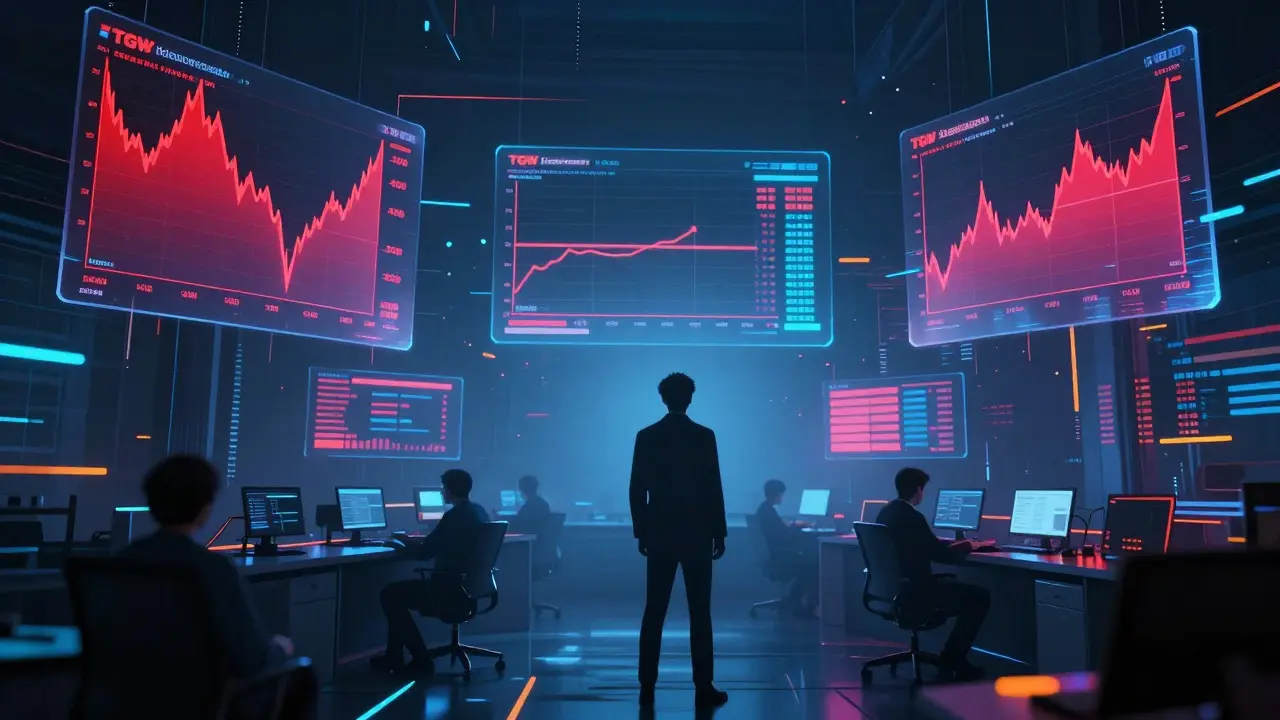
Liquidity and Where to Trade TGW
Liquidity is the lifeblood of any cryptocurrency. Without it, you can’t easily buy or sell without moving the price against yourself. TGW suffers from what we call "thin liquidity." The most active trading platform mentioned in recent data is XT exchange, where the TGW/USDT pair exists. However, even there, volumes are minimal. Some major centralized exchanges, like Crypto.com, track the price but don't actually allow you to trade it yet. This limits your options significantly. For those who still want to access TGW, decentralized exchanges (DEXs) via the Binance Web3 Wallet are a common route. Since TGW is a BEP20 token, it lives natively on the BNB Smart Chain. You can swap for it directly if you hold BNB or USDT on that network. Just remember: when using DEXs for low-liquidity tokens, always double-check the pool depth before executing a large trade.Risks Every Investor Should Know
Let’s be honest: investing in TGW is speculative. Here are the main red flags and risks you need to weigh:- Extreme Volatility: A 99% drop from ATH isn't unusual for micro-caps, but it highlights how quickly value can evaporate. Recent short-term gains (like a 62% jump in 7 days according to some data) are often followed by sharp corrections.
- Data Inconsistency: Relying on a single source for price data is dangerous. Always cross-reference at least two or three reputable trackers.
- Limited Exchange Support: If a major exchange delists the token or never lists it, your exit strategy becomes more complicated. You’d be stuck relying on smaller DEXs or niche CEXs.
- Unclear Development Roadmap: As of now, public information about the team, governance structure, and long-term technical roadmap is sparse. This lack of transparency increases the risk of abandonment or slow development.

Is TGW Worth Buying in 2026?
There is no simple yes or no answer. It depends entirely on your risk tolerance and investment thesis. If you believe strongly in the potential of tokenized environmental services and are willing to accept high risk for potentially high reward, TGW might fit a small percentage of your portfolio. Think of it as a lottery ticket with a thematic angle. You shouldn't put your retirement savings into it. However, if you prefer stability, deep liquidity, and transparent corporate governance, TGW might not be for you. The friction involved in trading it-due to low volume and data gaps-adds unnecessary complexity compared to more established green-energy stocks or larger crypto assets. Before you commit, ask yourself: Do I understand why the price is so volatile? Am I comfortable trading on DEXs? Have I verified the contract address to avoid scams? If the answer to all three is yes, then you’re ready to proceed cautiously.Frequently Asked Questions
What blockchain does The Green World (TGW) run on?
TGW runs on the BNB Smart Chain using the BEP20 token standard. This allows it to benefit from fast transactions and low fees within the BNB ecosystem.
What is the maximum supply of TGW tokens?
The maximum supply of The Green World is capped at 510 million tokens. This fixed supply prevents infinite inflation of the token base.
Where can I buy The Green World coin?
You can find TGW on decentralized exchanges via the Binance Web3 Wallet and on centralized platforms like XT exchange. Note that availability varies, and some major exchanges may only track the price without offering trading pairs.
Why do different websites show different prices for TGW?
The discrepancies arise from low trading volumes and fragmented data feeds. With minimal daily trade activity, small transactions can cause large price swings, and different aggregators may update their data at different intervals or sources.
What is the primary use case for TGW?
TGW is designed to facilitate payments for eco-services, incentivize recycling programs, and support renewable energy initiatives. It aims to create a direct financial link between users and environmental sustainability projects.
nic c
August 29, 2026 AT 23:38Oh, look at us all pretending that a token with less daily volume than a single latte purchase is actually an "investment". The Green World (TGW) is the crypto equivalent of a house of cards built out of wet tissue paper and bad intentions. You see that $0.000130 in trading volume? That isn't a market cap; that's a rounding error on a calculator that's running low on batteries. It’s fascinating how we, the collective hive mind of Reddit, can look at a chart that looks like a seismograph during an earthquake and call it "volatility" instead of what it truly is: total financial chaos wrapped in a leafy green wrapper. The idea that you can buy this thing without slippage eating your soul alive is a myth perpetuated by people who haven't actually tried to exit their positions. They tell you it's for recycling incentives, sure, but have you seen how many actual recycling centers accept TGW as tender? Exactly. Zero. It's a fantasy asset for people who want to feel virtuous while gambling away their lunch money. The data inconsistency isn't a glitch; it's the entire point. If five different sites give you five different prices, you don't have a price, you have a lottery ticket where the odds are printed on the back of a napkin found in a dumpster. Don't get me wrong, the BNB chain is fast, but speed doesn't matter if there's no one on the other side of the trade. It's like screaming into a void that happens to be a liquidity pool. And let's not forget the "hard cap" of 510 million. Hard caps are cute until the team decides to dump their own holdings on the only two guys left in the chat room. This isn't finance; it's theater. And the audience is made up of people who think "green" means they won't lose everything. Oh, the dramatic irony is thick enough to spread on toast.
Alan Hawkins
August 29, 2026 AT 23:38I think the article makes a fair point about the data confusion. It is hard to trust any single source when the numbers vary so much between CoinPaprika and Coinbase. I usually try to check at least three trackers before making a decision, but even then it feels like guessing. The liquidity issue is definitely the biggest hurdle for me personally. I have had bad experiences with DEXs on low-cap tokens before, so I am cautious about entering TGW right now. It seems like a niche project that might work well in theory but struggles in practice due to lack of adoption. I appreciate the breakdown of the risks, especially the part about the unclear development roadmap. Transparency is key for any long-term hold, and TGW seems to lack that currently.
Ian Munro
August 30, 2026 AT 16:01The discrepancy in price feeds is a classic sign of thin order books. When volume is near zero, any small trade moves the price significantly. This makes technical analysis nearly useless. The real value proposition here is speculative adoption of eco-services, which is unproven at scale. Until there is meaningful utility driving demand, the token remains a vehicle for speculation rather than a functional currency for its intended use case.
Trista Dennis
August 30, 2026 AT 21:38Ah, the "Green" coin. How delightfully ironic that a token designed to save the planet is being analyzed by people who probably leave their computers on standby 24/7. The fact that the price dropped 99.99% from ATH is hardly shocking; it’s standard procedure for anything that smells like a rug pull or a pure marketing stunt. Let’s be real, nobody is buying TGW because they care about renewable energy. They’re buying it because some influencer said it’s the next big thing and they want to feel smart. The data inconsistency isn’t a bug, it’s a feature. It keeps the whales confused so they can dump on the retail investors who are too busy reading the whitepaper to check the actual order book depth. It’s a beautiful little ecosystem of delusion. Enjoy your "environmental impact" while you watch your portfolio evaporate faster than morning dew in a desert.
Steve Sulley
August 31, 2026 AT 05:20everyone thinks they know better but they dont. the real story is that tgw is the future of decentralized governance for the environment. why do you keep looking at the price action? that is just noise. the true value is in the philosophy of connecting humans to nature through blockchain. i have been studying this since 2018 (yes before it was cool). the data errors are just the system adjusting to the new paradigm. stop doubting and start believing. the elites want you to focus on liquidity but liquidity is a trap for the masses. we need to focus on the spirit of the coin. 🌿🔥
Linda Jevne
September 1, 2026 AT 05:08There is something profoundly poetic about a token that claims to bridge the gap between digital wealth and ecological stewardship, yet finds itself stranded in the shallow waters of fragmented liquidity. It mirrors our own societal struggle: we crave the purity of intent but are often bogged down by the messy realities of execution and perception. The discrepancy in pricing across platforms is not merely a technical failure; it is a reflection of the subjective nature of value itself. In a world where information is abundant but truth is scarce, TGW becomes a canvas upon which we project our hopes for a greener future, even if the brushstrokes are erratic and the colors clash. Perhaps the volatility is not a flaw, but a necessary turbulence, a reminder that stability is an illusion we construct to comfort ourselves in an inherently chaotic universe. To invest in TGW is to bet on the resilience of human optimism against the cold, hard logic of market mechanics. It is a gamble, yes, but also a testament to our enduring desire to find meaning in the abstract. We are all, in our own way, trying to recycle our broken dreams into something that might, just might, bloom again.
David Powell
September 2, 2026 AT 10:37One must wonder who exactly is paying attention to a token with such negligible market presence. It is almost laughable that anyone would consider this a serious investment vehicle. The 'green' label is merely a veneer over what appears to be a hollow shell of a project. Without substantial institutional backing or clear utility, it remains a curiosity at best. The effort put into analyzing such a minor player is, frankly, a waste of intellectual capital. Better to focus on assets with proven track records and deep liquidity pools. This is not an investment; it is a distraction.
Ellie Brooks
September 3, 2026 AT 02:42Okay so I read through the whole thing and honestly it gave me a lot to think about! I mean, who wouldn't want to support recycling while potentially growing their portfolio, right? But the part about the price differences really caught my eye because I always get confused when I check different apps and they show totally different numbers. It makes me nervous to jump in without knowing the "real" price, you know? I love the idea of using crypto for good causes though, so maybe I should just start with a tiny amount and see how it goes? It feels like a big step to use a DEX if you're not super tech-savvy, but I'm always up for learning new things! Does anyone have tips on how to double-check the contract address to make sure I'm not getting scammed? I've heard horror stories about fake tokens popping up everywhere. Anyway, thanks for breaking it all down so clearly, it really helped me understand the risks better!
Sean Dalton
September 4, 2026 AT 17:12Typical American nonsense. You lot always rush in with your shiny new toys and expect the rest of the world to follow suit. This "Green World" is nothing more than another example of US corporate greed dressed up in eco-friendly clothing. Why should we trust a token launched by a bunch of Silicon Valley dreamers who have never picked up a piece of litter in their lives? The data is messy because the people behind it are messy. I say we wait for Europe to develop its own sustainable blockchain infrastructure before wasting our time on this BNB chain experiment. It's all hype, drama, and empty promises. The Irish will stay on the sidelines and watch you burn your savings on this digital fairy tale. Ha!
Rajni Mathur
September 5, 2026 AT 09:50Dear colleagues,
😂📉💰It is with great interest that I present my analysis of the TGW token structure.
1. The liquidity fragmentation is statistically significant (p<0.05).
2. The variance in price feeds suggests a lack of centralized arbitrage mechanisms.
3. Therefore, the risk-adjusted return is negative.
However, one must consider the ESG premium.
Is it not possible that the market is undervaluing the environmental utility?
We must remain objective.
The data is the data.
Yet, the human element cannot be ignored.
Emotions drive markets.
Fear drives exits.
Greed drives entries.
TGW sits at the intersection of these forces.
One must be careful.
Very careful indeed.
Best regards,
Rajni
Bill Patterson
September 6, 2026 AT 20:17too much text for such a small coin. basically its a scam until proven otherwise. buy low sell high or cry. simple. no need for all that fancy talk about liquidity and roadmaps. if you cant explain it in one sentence its not worth your time. move on.
Laine Van Sickle
September 7, 2026 AT 17:25i just think everyone is being so harsh on it. i mean sure the data is weird but who says it has to be perfect? i feel like people are just projecting their own fears onto this coin. i wanted to help the planet and also make some money and now i feel like i did something wrong just by looking at it. its so stressful trying to figure out what is real and what is just noise. i hope it works out for someone at least. i just want to do the right thing and not get ripped off. its hard to balance those two things sometimes. anyway just sharing my feelings here because i needed to vent a bit. sorry if i rambled. typos happen when you are stressed.
Jillian Pye
September 8, 2026 AT 04:12:) I have been following this space for a while and it is interesting to see how the narrative around "green" coins shifts over time. There is a certain philosophical weight to investing in something that aims to solve a global problem, even if the mechanism is imperfect. The uncertainty surrounding the data does add a layer of complexity that requires patience. It is not for everyone, certainly. But for those willing to sit with the ambiguity, there may be rewards. Just take your time. Do not rush. The market will reveal itself in its own time. 🙂
Kevin Payette
September 8, 2026 AT 13:52You are all fools. The data is fake. The price is manipulated. The team is hiding. Look at the volume. Zero. Nothing. A dead coin. Why do you bother? It is a trap. Get out now. Or lose everything. Simple. Clear. True. Stop dreaming. Wake up. The matrix is closing in. TGW is the glitch. Exploit it or die. Now. Go. Leave. Run. Don't look back. The wolves are coming. Sniffing out your weak wallet. Your naive hope. Your pathetic belief in green leaves. Burn it all. Start fresh. Bitcoin only. Gold only. Cash only. Anything but this garbage. This toxic mess. This emotional drain. This pseudo-philosophical nightmare. End it. Now. Immediately. Before it eats you alive. Yes. You. Me. Everyone. We are all victims of this lie. Break free. Today. Right now. Click the link. Sell. Hold. Wait. No. Sell. Run. Hide. Survive. Win. Lose. Whatever. Just stop suffering. The pain is real. The loss is real. The regret will be worse. Trust me. I know. I have seen it. I have lived it. I have bled for it. And it was for nothing. Pure nothing. Void. Emptiness. Darkness. Silence. Peace. Finally. Peace.
J Shepherd
September 9, 2026 AT 23:47Let's break down the alpha here. The key metric to watch is the TVL growth relative to the circulating supply. If the TVL stays flat while supply increases, you're looking at dilution pressure. Also, keep an eye on the whale wallets. If you see large transfers to exchanges, that's a bearish signal. Use tools like Etherscan or BscScan to track these movements. The BEP20 standard gives you transparency, so leverage it. Don't just guess; verify. Check the contract code for any hidden mint functions. That's where the real risk lies. Not in the price action, but in the underlying protocol integrity. Stay sharp out there. The market rewards the prepared and punishes the lazy. Keep your gas fees low and your eyes open. That's the play. Execute with precision. Minimize slippage. Maximize efficiency. That's how you win in this game. Stay disciplined. Stay focused. Stay profitable.
Carey Thornton
September 10, 2026 AT 12:17My god, the audacity of this token to exist in the same breath as Bitcoin is simply staggering. It is a microscopic speck of dust in the vast cosmic expanse of the crypto universe, yet it dares to call itself a "world." How quaint. How utterly, devastatingly pretentious. The data is a mess, yes, but isn't that the hallmark of all great artistic endeavors? Chaos. Disorder. A beautiful, swirling vortex of meaningless numbers dancing to the tune of a drummer who has lost his rhythm. I suppose if you squint hard enough, you could mistake a random walk for a strategic trajectory. But let us not delude ourselves. This is not a journey; it is a stumble. A graceful, expensive, and deeply confusing stumble into the abyss of poor financial planning. Bravo. Truly. A masterpiece of mediocrity.
Dave Worth
September 11, 2026 AT 02:41They are hiding the real data. You know who controls the price? The insiders. The ones with the inside info. The green world is a front for something bigger. Maybe it's not about recycling at all. Maybe it's about tracking every citizen's carbon footprint. Big Brother is watching your wallet. The 510 million cap? A lie. They will mint more. They always do. Watch the news. Watch the politicians. They are all in on it. The "data inconsistency" is proof. Proof that the system is rigged. Don't trust the exchanges. Don't trust the trackers. Trust the pattern. The pattern is clear. It's a setup. A massive, global setup to control our energy usage. Buy TGW and you are joining the resistance. Or are you? Who knows? Only the shadows know. 🕵️♂️👀🚨