
Imagine your old smartphone earning you money just by sitting on your desk. That is the core promise of UpRock, a mobile-first Decentralized Physical Infrastructure Network (DePIN) built on the Solana blockchain. The project pays users in its native utility token, UPT, for sharing their idle internet bandwidth and device resources. These resources power web crawling, data collection, and real-time insight services specifically designed for artificial intelligence applications.
If you are looking at this coin because of recent news or a friend's recommendation, you might be wondering if it is a legitimate opportunity or just another speculative asset. As of August 2026, UPT trades at a low price point, with market caps hovering around $500,000 to $1 million. This article breaks down exactly what UpRock does, how the token works, and whether it makes sense for your portfolio right now.
The Core Concept: Bandwidth Sharing for AI
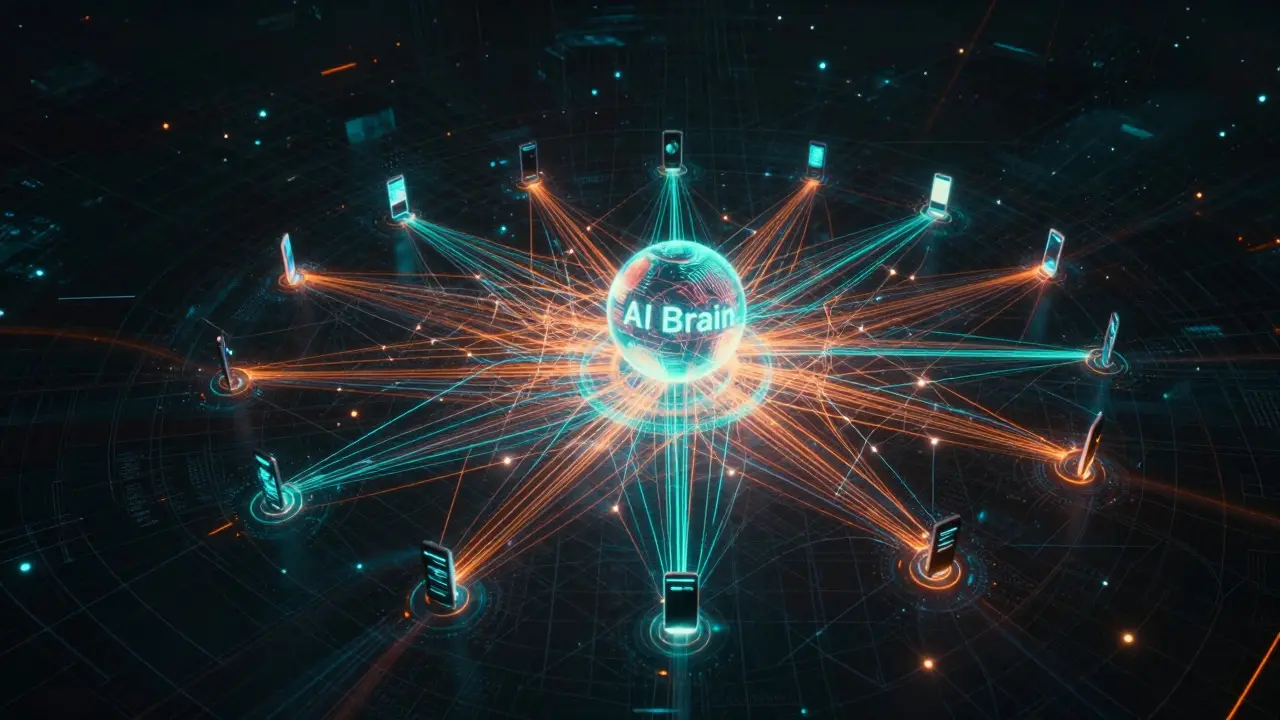
Traditional data centers struggle to get localized, uncensored web data. They often face IP-based rate limits or geo-blocking when trying to scrape websites from different countries. UpRock solves this by turning regular consumer devices into a distributed network. Instead of relying on a few massive servers, the platform uses thousands of smartphones, tablets, and computers running in the background.
This infrastructure is known as the "Knowledge Acquisition Layer" (KAL). It consists of real browsers on real devices that feed data into an "AI Insight Exchange." When an enterprise client needs to monitor website availability or collect specific local data, they route requests through UpRock’s SaaS platform, Prism. Your device handles a small part of that request, and you earn UPT for the service provided. It is essentially a decentralized proxy network optimized for AI agents rather than human privacy.
How UPT Works: Token Utility and Earning Mechanics
UPT is an SPL token on the Solana network. It serves as the native currency for all interactions within the ecosystem. You use it to pay for premium features, access AI tools, and receive rewards for contributing bandwidth.
Earning UPT isn't just about leaving the app open. The reward rate is calculated using a specific formula that considers several factors:
- Upload and Download Speed: Faster connections generally yield higher base rates.
- Connection Type: Fiber and cable connections often have different weightings compared to mobile data.
- Freedom Score: This reflects the scarcity of traffic from your region. Data from certain geopolitical areas is more valuable, so users in those regions may earn more.
- Mining Time: Rewards accumulate continuously while the device is online.
Users can boost their earnings by connecting multiple devices on distinct residential IPs, completing in-app offers that pay in UpRock Points (redeemable for UPT), and staking. If you hold at least 100 UPT, you can stake it directly in the app or via liquid staking derivatives like uptSOL in wallets such as Phantom or Solflare. Staking earns additional UPT every Solana epoch, which lasts roughly two to three days.
Tokenomics and Supply Structure
Understanding the supply dynamics is crucial for evaluating long-term value. UpRock has a maximum supply of approximately 1 billion UPT tokens. The distribution is split roughly 50% for the community and 50% for the team, treasury, and ecosystem incentives.
| Metric | Value / Detail |
|---|---|
| Total Supply | ~974-981 Million UPT |
| Circulating Supply | ~161-220 Million UPT (varies by source) |
| Current Price Range | $0.0022 - $0.0026 USD |
| Market Cap | ~$500k - $1.1M USD |
| IDO Price (May 2024) | $0.1065 USD |
| Miner Distribution | 4.2 Million UPT per month for 10 years |
The tokenomics whitepaper outlines a "Fixed Monthly Supply" phase where 4.2 million UPT is allocated to miners each month from a pool of 500 million. This phased emission schedule aims to keep inflation constrained over the next decade. However, the current price is significantly lower than the Initial DEX Offering (IDO) price of $0.1065, representing a drawdown of over 90%. This sharp decline reflects both broader market conditions and the high initial valuation at launch.
Revenue Sharing and Burn Mechanisms
One of UpRock's distinguishing features is its revenue-sharing model, inspired by NFT royalties. A portion of fees generated from platform usage flows back to token holders and the treasury. For example, when AI agents use UpRock’s products, 50% of the payment goes to the treasury, and the other 50% is used for community buybacks. Half of the bought-back UPT is burned immediately, reducing circulating supply.
For bandwidth sales, 20% of revenue funds buybacks, 40% goes to the treasury, and 40% is paid directly to network contributors. Fees collected in stablecoins like USDC or SOL are also routed through buyback mechanisms. This design attempts to tie the token's value directly to real-world demand for data services, rather than just speculation.
Partnerships and Ecosystem Integration
UpRock has actively pursued partnerships to expand its utility and user base. Notable collaborations include:
- Koii Network: Enables users to earn both UPT and KOII tokens by completing data tasks.
- Synesis One: Integrates Train2Earn mechanics, allowing users to earn SNS tokens alongside UPT.
- DATS: Connects UpRock users to a decentralized cybersecurity marketplace.
- Cube Exchange: Integrates UpRock into the Pocket Cube mobile app for seamless interaction.
These integrations create a multi-token earning environment, increasing the potential income streams for active users. By February 2025, UpRock had reported over 700,000 contributors, indicating significant adoption within the DePIN sector.
User Experience and Real-World Earnings
Getting started is straightforward: register with an email, download the app, and enable bandwidth sharing. However, user feedback is mixed. Many praise the passive nature of the income, but others complain about low daily payouts. At current prices, earning 3-5 UPT per day translates to fractions of a cent, which may not justify the battery drain or data usage for some users.
Withdrawals have historically been a pain point, with reports of delays and technical issues. While the app supports direct withdrawals to Solana wallets, some users recommend using the web interface for smoother transactions. Customer support responsiveness has also been cited as a concern in various reviews. Despite these friction points, the platform remains active, with documentation updates continuing into mid-2026.
Risks and Future Outlook
Investing in UPT comes with inherent risks. The token has experienced significant volatility, dropping from its IDO price to low single-digit cents. Its value is tightly coupled to enterprise demand for UpRock’s data APIs. If large AI companies choose centralized data providers instead, the utility of UPT could diminish.
On the positive side, the intersection of DePIN and AI is a growing trend. As AI agents become more prevalent, the need for diverse, real-time, and geo-specific data will likely increase. UpRock’s position as a "data acquisition layer" gives it a unique niche. The 10-year miner distribution horizon ensures that emissions will continue well into the 2030s, providing a long-term incentive structure for early adopters.
Whether UPT becomes a major player depends on whether UpRock can convert its technical advantages into sustainable, paying enterprise contracts. For now, it remains a highly speculative asset with innovative technology but unproven long-term economic viability.
Is UpRock (UPT) a good investment in 2026?
It is highly speculative. The token has dropped over 90% from its launch price. While the technology is innovative, the current market cap is low, and earnings for individual users are minimal. Investors should only allocate capital they can afford to lose, keeping in mind the ongoing token emissions and competitive landscape in the AI data sector.
How do I start earning UPT?
Download the UpRock app on iOS, Android, or desktop. Register with an email address and enable bandwidth sharing. Ensure your device has a stable internet connection. To maximize earnings, connect multiple devices on different residential IPs and complete in-app offers. You can also stake UPT to earn additional rewards.
Where can I buy UPT?
UPT is listed on several centralized exchanges (CEXs) like Bybit and Coinbase, as well as decentralized exchanges (DEXs) on the Solana network. You can purchase it directly or swap it from other assets like SOL or USDC. Always verify the contract address to avoid scams.
What is the difference between UpRock and a VPN?
A VPN routes your traffic through private servers to hide your location. UpRock routes enterprise web scraping requests through *your* device to gather localized data. You are not hiding your identity; you are providing infrastructure for data collection. The goal is data acquisition for AI, not personal privacy.
Does UpRock burn tokens?
Yes. A portion of revenue from AI agent usage and account management fees is used for buybacks. Half of the bought-back UPT is burned immediately, reducing the total circulating supply. This mechanism aims to create deflationary pressure if platform usage grows.
Matt Reckdenwald
August 26, 2026 AT 13:24Man, reading this felt like watching a slow-motion car crash in high definition. The idea of your phone earning you money is so painfully beautiful, isn't it? It’s like the digital equivalent of selling your own shadow to pay for the light. I love how they frame it as 'idle bandwidth' but really, it’s just our attention and electricity being harvested by AI giants. It makes you wonder if we are truly the users or just the livestock here.
The 'Freedom Score' part really got me though. Scarcity of traffic from certain regions? That sounds less like tech innovation and more like geopolitical arbitrage dressed up in a hoodie. We are literally monetizing our location in a way that feels uncomfortably transparent. If you live in a place with 'less freedom,' you earn more? That’s a spicy take on human rights economics.
I find it dramatic how they compare it to a VPN. A VPN hides you; UpRock exposes you to the data scrapers. It’s the difference between wearing a mask and becoming the billboard. For $0.002 per token, I’d rather keep my privacy intact and my battery full. But hey, maybe I’m just not ready for the brave new world where my toaster pays my rent via Solana.
Ashwin Bhandurge
August 28, 2026 AT 06:56Okay, let's pump the energy here! 🚀 This is actually a massive win for the DePIN sector. Think about it: we have millions of unused devices sitting around doing nothing. Why not turn that dead weight into a goldmine? The 'Knowledge Acquisition Layer' is basically the nervous system of the future AI ecosystem. You need real, local data to train models that understand local context, and centralized servers can't always get that due to geo-blocking. UpRock solves that elegantly.
The fact that they have over 700k contributors shows people are voting with their feet (or rather, their SIM cards). The partnerships with Koii and Synesis One are smart moves too. It creates a flywheel effect where you earn multiple tokens for one action. That's efficiency! Don't sleep on the staking aspect either. In crypto, yield is king, and even small yields compound beautifully over time. Let's stay bullish on the infrastructure layer!
Nadia Christian
August 29, 2026 AT 21:19Finally, some American ingenuity that doesn't rely on foreign subsidies! 💪🇺🇸 It is refreshing to see a project that actually understands the value of decentralized infrastructure. We do not need another centralized server farm run by big tech elites. We need our own network, powered by our own devices, earning our own tokens. This is the spirit of the free market at work!
The burn mechanism is particularly appealing to me. Deflationary pressure is what keeps currency strong, right? If they are buying back and burning UPT, that means the supply is shrinking while demand hopefully grows. That is basic economics 101. I am glad we are seeing US-based developers taking the lead in this space instead of letting offshore entities control the narrative. Keep pushing, America! 🦅
jeffry jones
August 30, 2026 AT 10:38Solid breakdown. The KAL architecture is key here. Basically, it’s a distributed proxy mesh optimized for scraping latency-sensitive tasks. The SPL token standard ensures low gas fees, which is critical for micro-transaction rewards. If you’re looking at the unit economics, the cost of compute vs. reward payout ratio needs to stay positive for sustainability. Right now, the emission schedule looks manageable, but watch out for the unlock cliffs. Standard DePIN playbook, but execution is everything. Nice read overall.
Martha Packard
August 31, 2026 AT 00:01You all are missing the forest for the trees. Or rather, you are staring at the tree and ignoring the axe. This isn't a tech story; it's a psychological experiment. They aren't building a network; they are building a habit. Get people used to giving away their data for pennies today, and tomorrow they'll give it away for free because they think it's 'participation.' The 'Freedom Score' is just a euphemism for surveillance capitalism with a loyalty card. We are not users; we are the product. And the price tag is laughable. Wake up, sheeple. The matrix is eating your lunch money and calling it 'yield.'
nic c
September 1, 2026 AT 08:43Oh, look at us, playing with our shiny new blockchain toys again. I remember when we were promised the moon with ICOs, and now we're down here trading fractions of a cent for the privilege of having our phones warm up our laps. It’s a bit embarrassing, honestly. Who actually reads these whitepapers? Is it just a bunch of degens hoping for a 100x miracle while their battery drains to zero? The 'AI Insight Exchange' sounds like something a marketing intern came up with at 3 AM after three espressos. Give me a break. It’s all smoke and mirrors, folks. The real infrastructure is still running on boring old copper wires and fiber optics, thank you very much.
Ellie Brooks
September 3, 2026 AT 06:45I’ve been tinkering with this app for about two weeks now and honestly, the experience is surprisingly smooth for a beta-stage DePIN project! What I love most is how seamless the integration is with other Solana wallets like Phantom. You don’t feel like you’re jumping through hoops just to claim your daily rewards. It’s such a nice change from those clunky dApps that freeze every five minutes. The UI is clean, intuitive, and actually fun to use, which is rare in this space. Plus, knowing that my data is helping train AI models gives me a sense of purpose beyond just making a few cents. It feels like contributing to the future of technology, one byte at a time! If you’re on the fence, I highly recommend giving it a try. Just make sure your connection is stable, and you’ll be good to go. It’s a great little side hustle that doesn’t take up much mental energy.
Rajni Mathur
September 3, 2026 AT 19:57It is interesting to note that the tokenomics suggest a deflationary model, yet the circulating supply remains relatively low compared to the total issuance. 😐 The 'Fixed Monthly Supply' phase implies a controlled inflation rate, which is prudent for maintaining holder confidence. However, one must consider the opportunity cost of capital tied up in such a low-cap asset. The risk-reward ratio appears skewed towards speculation rather than fundamental utility at current price points. Nevertheless, the strategic positioning within the AI data sector warrants close observation. 📉
Bill Patterson
September 4, 2026 AT 16:21just another scam. nobody uses this. its dead on arrival. why bother with solana when ethereum is better? whatever. i sold mine months ago. dont buy the dip. its a cliff. typical crypto hype cycle. move on to the next thing. waste of time.
Melanie Armijo
September 4, 2026 AT 16:44There is a profound irony in using decentralized infrastructure to serve centralized AI models. We are building a distributed web to feed the monoliths of Big Tech. Is this true decentralization, or just a more efficient pipeline for data extraction? The concept of 'freedom' in the Freedom Score suggests that our geographic location has inherent economic value, which raises questions about who owns our digital footprint. Are we liberating data, or just changing the landlord? It’s a philosophical puzzle wrapped in a technical solution. We must ask ourselves: does the end justify the means? Or are we simply trading one form of dependency for another? The answer, as always, lies somewhere in the murky middle ground of reality.
Laine Van Sickle
September 5, 2026 AT 12:20i mean its cool and all but does anyone else feel like we are just getting played here? like really? my phone gets hot as heck and i only made like 3 dollars this month? thats not even enough for a coffee. and the withdrawals are a nightmare. took me like 3 days to get my funds. support is ghosting everyone. i feel like a sucker for believing the hype. why cant we just keep our data to ourselves? it feels so unfair. anyway moving on. hope yall have better luck. dont say i didnt warn u.
Teresa Watson
September 6, 2026 AT 17:17oh wow another one of those 'save the world with your phone' schemes. i bet the founders are sipping champagne in a penthouse while we sweat our batteries dry for pennies. typical. just typical. you guys are all so naive. its not about the tech its about the exit liquidity. wait for the rug pull. mark my words. its coming. just watch. im right about everything usually. stop pretending this is legit. its a pyramid scheme with extra steps. bye.
Aaliyah Simpson
September 8, 2026 AT 16:38They are definitely tracking everything. My ping spiked yesterday and suddenly my earnings dropped by 10%. Coincidence? No way. They know when I'm gaming, when I'm streaming, when I'm sleeping. The 'Freedom Score' is just a way to punish people who live in 'free' countries so the data from 'restricted' areas is worth more. It's a global conspiracy to monetize our existence. Watch your step. They are listening. Always listening. The AI doesn't just want your data, it wants your soul. Stay vigilant out there folks. Trust no one. Not even your router.